
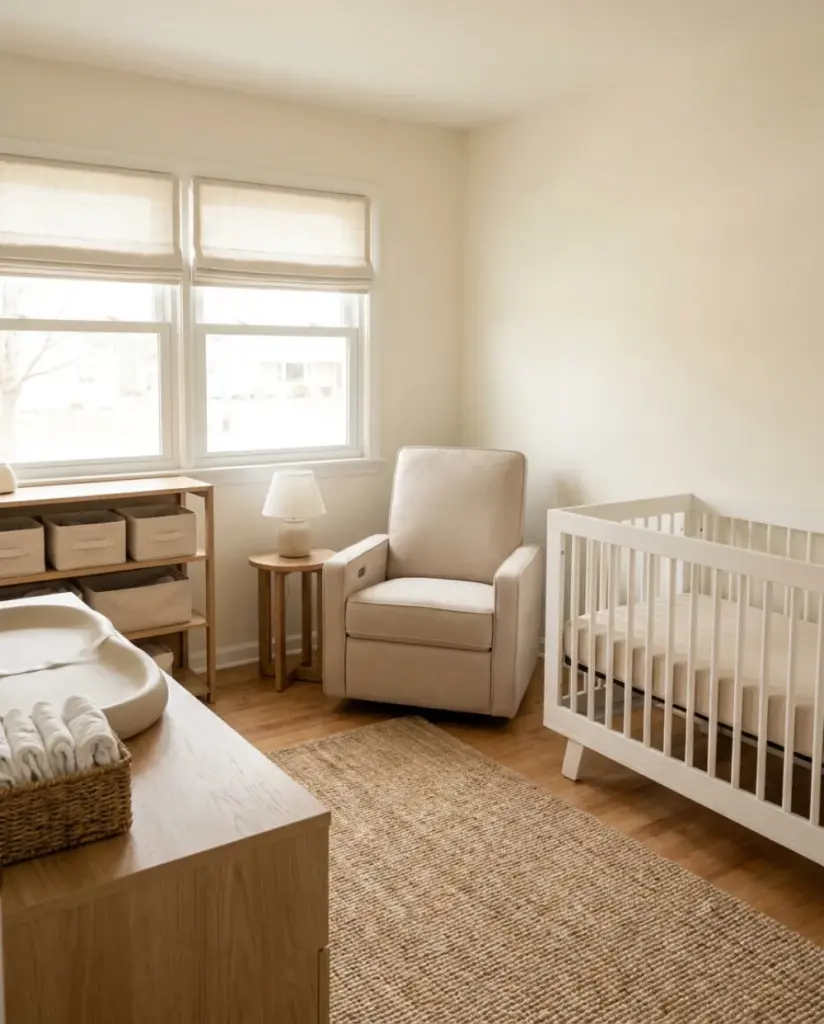
What is the best way to organize a nursery?
The best way to organize a nursery is to divide the room into zones for sleeping, changing, feeding and storage, then store every item in the zone where you use it, with daily items within one arm’s reach. A nursery runs on repetition, so the layout should let a tired parent find diapers, a clean sleeper or a burp cloth in the dark. The method follows six steps:
- Plan the nursery around four zones.
- Keep the crib bare and the sleep zone simple.
- Set up and anchor the changing station.
- Organize the dresser drawers from top to bottom.
- Sort the nursery closet by size.
- Build a laundry and restock routine.
Families often ask for help with a nursery during a whole-home project, and it fits naturally alongside our other home organizing services.
1. Plan the nursery around four zones
Planning the nursery around four zones puts every baby item where the task happens, which saves steps at 3 a.m. Sketch the room and assign each wall or corner one job.
Sleep zone
The crib goes on an inside wall, away from windows, blind cords and heaters. Keep a dim lamp or night light within reach for night checks.
Changing zone
A dresser with a changing pad on top saves space and doubles as clothing storage. Diapers, wipes and cream sit beside the pad.
Feeding zone
A glider or comfortable chair with a small side table or rolling cart holds burp cloths, a water bottle and a phone charger.
Play and storage zone
Low open bins and a soft floor mat cover the first months. Toys grow fast, and our guide on how to organize toys and a playroom picks up where the nursery leaves off.
2. Keep the crib bare and the nursery sleep zone simple
Keeping the crib bare is the most important rule in the nursery sleep zone, because the safest crib holds only a firm mattress and a fitted sheet. Storage, decor and soft items belong somewhere else in the nursery.
- No pillows, blankets, bumpers or stuffed toys in the crib.
- No shelves or heavy frames mounted above the crib.
- No hanging organizers on the crib rails.
- Keep cords from monitors and blinds well out of reach.
The National Institutes of Health’s Safe to Sleep campaign explains that a crib with nothing in it except a fitted sheet may seem bare, but it is the safest option for a baby.
The stakes are real. The American Academy of Pediatrics reports that around 3,500 babies in the United States die suddenly and unexpectedly while sleeping each year, which is why the sleep zone stays the simplest part of the room.
3. Set up and anchor the nursery changing station
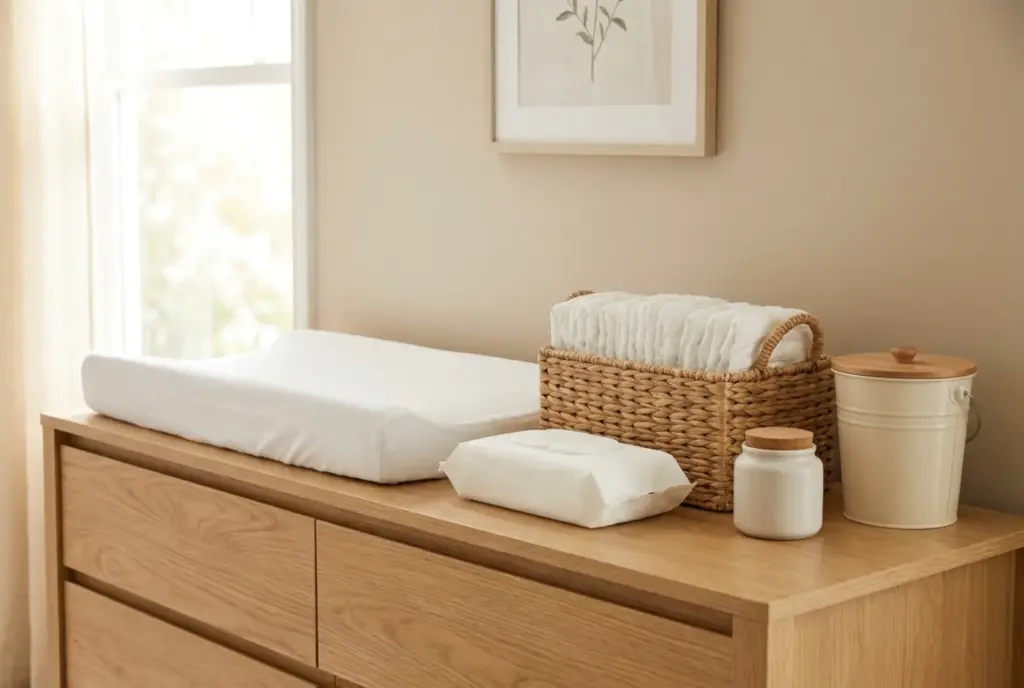
Setting up the nursery changing station on an anchored dresser gives you a safe, stocked place for every diaper change. A changing pad on a wide, sturdy dresser top works as well as a separate changing table and saves floor space.
- Anchor the dresser to the wall with an anti-tip kit before the baby arrives.
- Use a contoured changing pad with a safety strap.
- Keep a caddy of diapers, wipes, cream and a spare outfit beside the pad.
- Keep a small trash can or diaper pail within reach.
Anchoring matters well beyond the baby years. The American Academy of Pediatrics notes that a child is rushed to the emergency department at least once every hour with injuries from a furniture or TV tip-over, and open drawers make a dresser less stable.
4. Organize the nursery dresser drawers from top to bottom
Organizing the nursery dresser drawers from top to bottom means the most-used items go in the top drawer and the least-used items go at the bottom. Drawer dividers keep tiny clothes from turning into a single heap.
- Top drawer: socks, burp cloths, bibs, pacifiers and diaper backups.
- Middle drawers: current-size onesies, sleepers, pants and tops, filed upright.
- Bottom drawer: swaddles, sleep sacks, crib sheets and a spare blanket for the stroller.
Filing clothes upright, instead of stacking, lets you see every piece at once. Our guide on how to organize a dresser shows the folding method step by step.
5. Sort the nursery closet by size
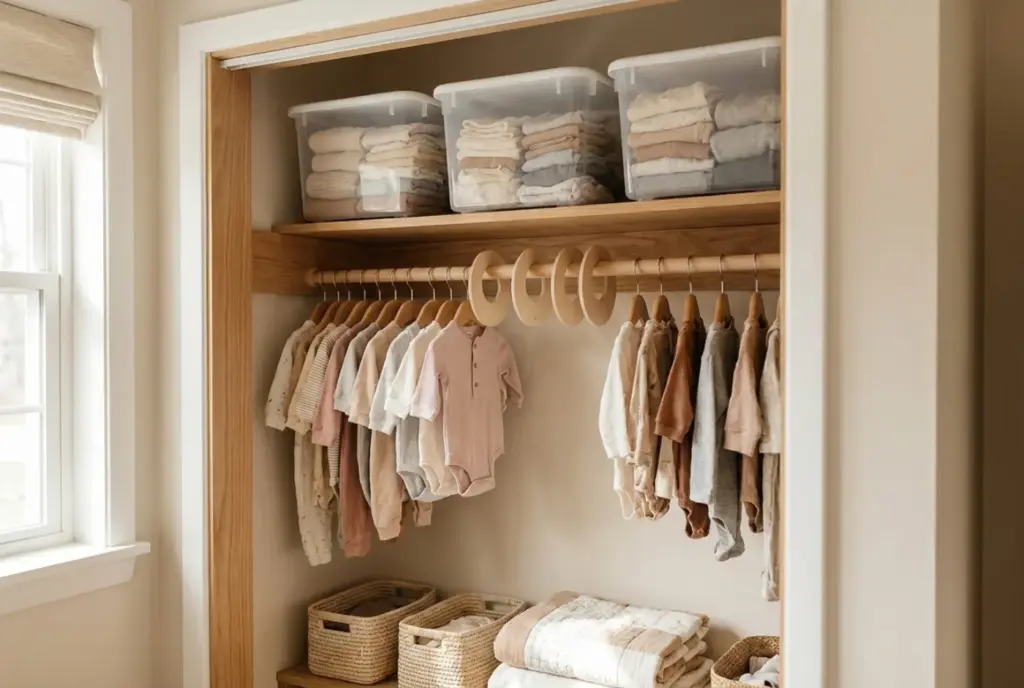
Sorting the nursery closet by baby clothing size keeps the nursery clothes that fit within reach and the next sizes ready to rotate in. Babies move through sizes in a few months, so the closet needs a system for what comes next and what gets outgrown. The rod and shelves follow the same planning rules as any other closet, which our guide on how to organize a closet covers.
- Hang current-size outfits on small hangers with size dividers on the rod.
- Keep one clear bin labeled for the next size up on the shelf.
- Keep one bin or bag for outgrown clothes to store, pass on or donate.
- Use the top shelf for extra diapers, wipes and gifts not yet in use.
Outgrown clothes you plan to save for a sibling store best clean and in sealed bins, the same way you would store seasonal clothes.
6. Build a nursery laundry and restock routine
Building a nursery laundry and restock routine keeps the system working once the baby is home and sleep is short. A routine means nothing runs out in the middle of the night.
- Keep a hamper in the nursery for baby clothes only.
- Restock the changing caddy every evening.
- Move clothes that no longer fit into the outgrown bin as soon as you notice.
- Keep a running list of supplies that are running low.
A five-minute evening reset covers most days. The rest happens at each size change, when the closet and dresser rotate together.
What should be included in a nursery?
A nursery should include a safe crib or bassinet, a sturdy dresser with a changing pad, a comfortable feeding chair, a hamper and enough closed storage for clothes and supplies. Those nursery essentials cover sleeping, changing, feeding and storage, and everything else in a nursery can wait until you know how you use the room.
- Crib with a firm mattress and fitted sheets.
- Dresser anchored to the wall, with a changing pad.
- Glider or chair with a side table.
- Hamper and a small trash can.
- Blackout curtains or shades with cordless controls.
- Closet or shelf storage with bins.
Starting with only these pieces leaves room to add what you actually need once the baby arrives.
How do you organize a small nursery?
Organizing a small nursery means letting one piece of furniture do several jobs and using vertical and closet space for everything else. A shared bedroom or a closet-sized nursery can still hold all four zones.
- Choose a dresser that doubles as the changing station.
- Use over-the-door organizers on the closet door, not on the crib.
- Store bulk diapers in the closet and keep a few dozen at the changing station.
- Pick a compact glider or skip the chair if feeding happens elsewhere.
In a shared room, a curtain or a bookcase anchored to the wall can mark off the baby’s corner.
How do professional organizers help prepare a nursery?
Professional organizers help prepare a nursery by turning a room full of gifts, hand-me-downs and boxes into a layout that works before the baby comes home. The work usually starts with editing what the family already has.
- We sort hand-me-downs and gifts by size and season.
- We plan zones around the room’s windows, outlets and doors.
- We research bins, dividers and hangers and send shopping links, and parents buy only what the plan needs.
- We take duplicate items to donation at the end of the session.
Expecting families in Troy and the surrounding towns can see how our local team works on the professional organizing in Troy, IL page.
Frequently asked questions
Where should a dresser go in a nursery?
A nursery dresser should go on a wall near the crib but not directly beside it, anchored to the wall, with space in front to stand while changing a diaper. Keep it away from windows so blind cords stay out of reach.
How do you organize baby clothes by size?
Organize baby clothes by size with rod dividers in the closet for current sizes, one bin for the next size up and one bin for outgrown pieces. Rotate the bins at each size change, usually every few months in the first year.
When should you start organizing a nursery?
Start organizing a nursery in the second trimester if you can, so the furniture is anchored, clothes are washed and the changing station is stocked several weeks before the due date. Gifts and hand-me-downs can be sorted as they arrive.
Do you need a separate changing table in a nursery?
No, a separate changing table is not necessary when a sturdy, anchored dresser can hold a contoured changing pad with a safety strap. The dresser saves floor space and stores clothes underneath.
Want help getting the nursery ready?
Kalli Erwin and the Just Right team help expecting families sort gifts and hand-me-downs, plan the room and set up storage that works from the first night. We research products, send shopping links and haul away donations at the end of each session. Request a free organizing consultation to plan the nursery with us.
Articles are researched and drafted with AI-assisted tools, illustrated with AI-generated images, and reviewed by Kalli Erwin before publishing.