
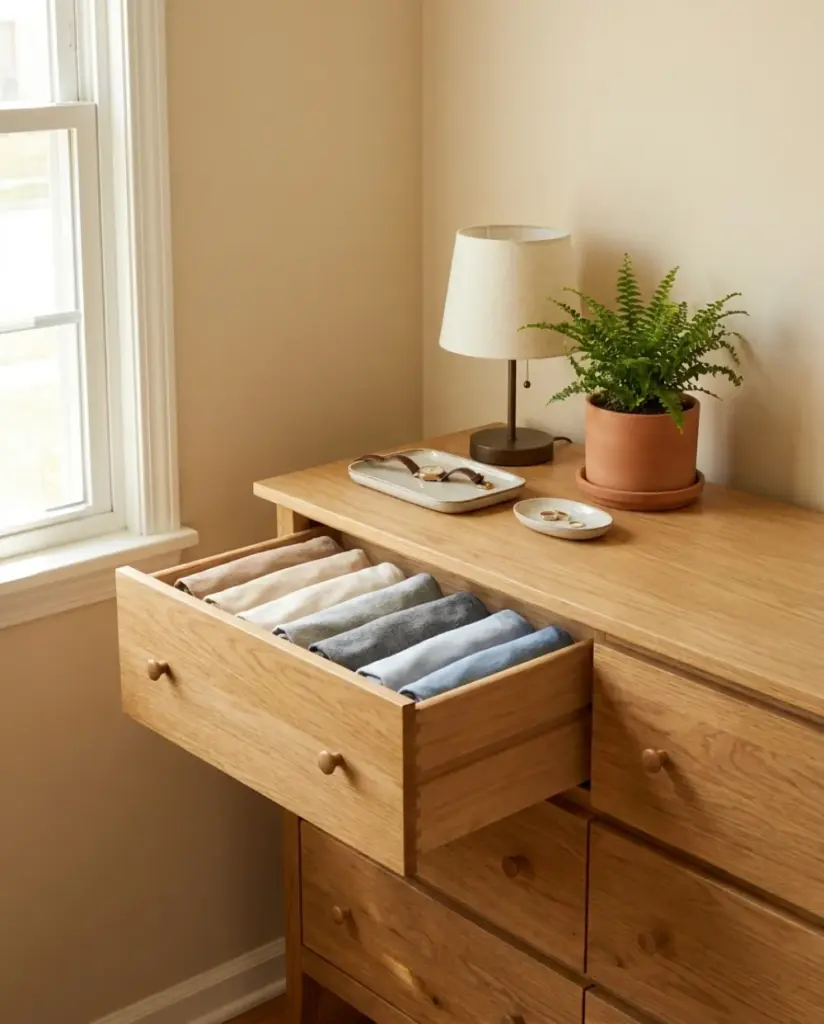
1. How do you start organizing a dresser?
You start organizing a dresser by emptying every drawer onto the bed, wiping the drawers clean and sorting the clothes into groups before anything goes back in. Seeing every shirt, sock and pair of pajamas at once shows you what you own and how much drawer space each category needs.
- Empty one drawer at a time onto a clear bed or table
- Vacuum or wipe the inside of each empty drawer
- Group clothes by type: underwear, socks, sleepwear, tops, bottoms, workout clothes
- Set aside anything stained, stretched, torn or too small
This sort-first approach is the same one used in closet organizing, where every category earns its spot before it gets a container. With the piles in front of you, the next job is deciding which clothes go back in at all.
2. Which clothes should you take out of your dresser?
Take out of your dresser the clothes you have not worn in the past 12 months, anything that no longer fits and pieces that are worn out. Your dresser drawers work best when they hold only the clothes you wear now, with a little breathing room in each drawer.
How do you decide what to let go of?
- Has it been worn in the last year?
- Does it fit and feel comfortable today?
- Do you own five of the same item when two would do?
- Would you wear it this week if it were clean?
Where should clothes from your dresser go?
- Donate: clean, wearable clothes in good condition
- Pass on: kids’ clothes or special pieces a friend or relative can use
- Recycle: worn-out cotton and fabric through a textile collection bin
- Repair: favorites that need only a button or a hem
Bag donations right away and put them in the car, so they leave the house before they drift back into a drawer. Donate wearable pieces and recycle the rest where you can, because textiles add up: the EPA estimated that 17 million tons of textiles entered the U.S. municipal waste stream in 2018, and only 14.7 percent of them were recycled.
3. What should go in each dresser drawer?
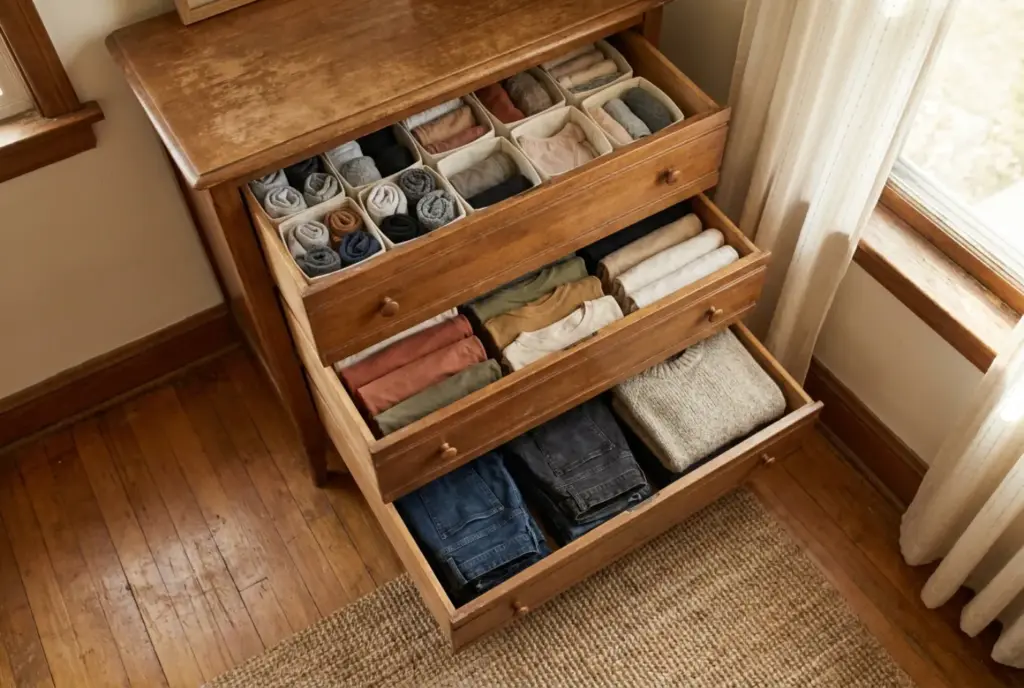
Each dresser drawer should hold one group of clothes: everyday items in the top drawers, casual clothes in the middle drawers and heavy or bulky items in the bottom drawers. This drawer layout keeps the clothes you reach for every morning at hand height and keeps the dresser’s weight low.
| Drawer | What goes inside |
|---|---|
| Top drawers | Underwear, socks, bras, sleepwear and small accessories |
| Middle drawers | T-shirts, casual tops, leggings and workout clothes |
| Bottom drawers | Jeans, heavy pants, sweaters and sweatshirts |
Shared dressers work the same way: give each person their own drawers instead of splitting a drawer down the middle. In a small room, our small bedroom organizing guide shows where a dresser fits best. Tall dressers should be anchored to the wall with an anti-tip kit, especially in homes with young children. Once each drawer has a job, the way you fold decides how much fits inside.
4. What is the best way to fold clothes for dresser drawers?
The best way to fold clothes for dresser drawers is file folding, where each item is folded into a small rectangle that stands upright, side by side, like files in a cabinet. File folding lets you see every shirt when you open the drawer, so nothing gets lost at the bottom of a stack.
Is it better to roll or fold clothes in a drawer?
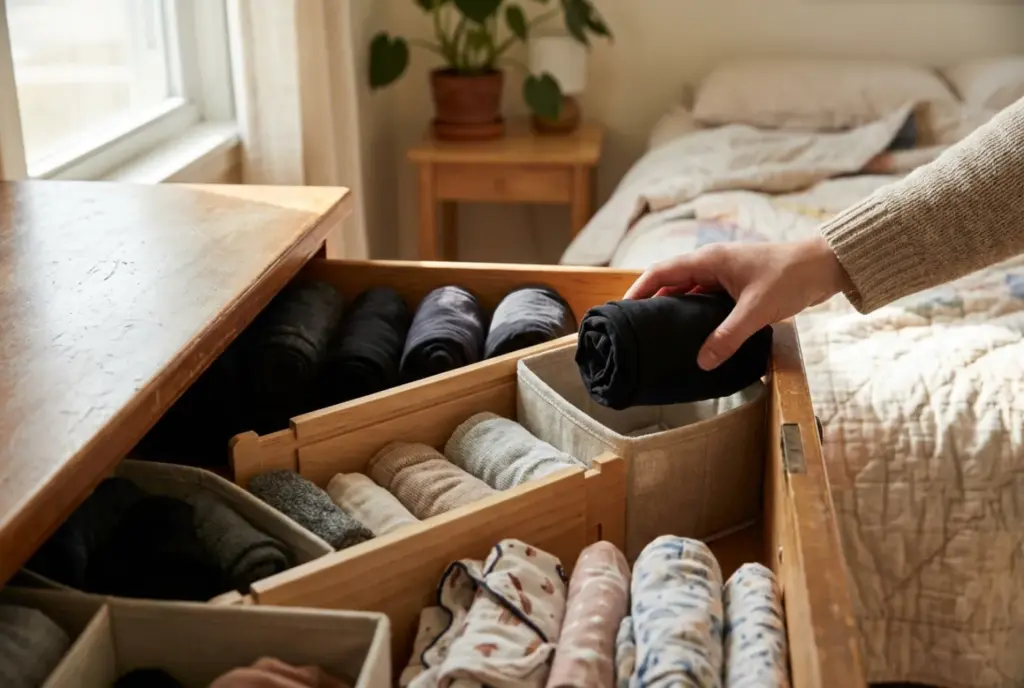
Folding works better for structured items like T-shirts and jeans, while rolling works better for soft, stretchy pieces like leggings, pajamas and workout clothes. Both methods beat flat stacks because each item stays visible.
What is the Japanese folding method?
The Japanese folding method is another name for file folding: fold the garment in thirds lengthwise, then fold it in half or thirds again until it stands on its own edge.
- T-shirts and tanks: file fold
- Leggings and pajamas: roll
- Socks: fold in half instead of balling, which protects the elastic
- Sweaters: fold flat and stack no more than three high
5. How do you use drawer dividers in a dresser?
Use drawer dividers in a dresser to give each category its own lane, so socks, underwear and accessories stay separate every time the drawer opens and closes. Dividers stop the slow mixing that turns an organized drawer into a jumble within a few weeks.
- Spring-loaded dividers for deep drawers with folded shirts
- Small open bins or honeycomb inserts for socks and underwear
- Shallow trays for belts, watches and hair accessories
- Fabric boxes for bras and delicates
Measure the inside width, depth and height of each drawer before you buy anything, and choose dividers that fit the categories you already sorted.
6. How do you organize the top of a dresser?
You organize the top of a dresser by limiting it to a few useful items and grouping small things on a single tray. A dresser top works best as a landing spot for daily items, not long-term storage.
- One tray for jewelry, a watch and keys
- A lamp or a small plant
- One framed photo or a decorative piece
- A lidded box for loose change and receipts
If rings and necklaces pile up, our jewelry organizing guide shows how to sort them into shallow trays and drawer inserts.
What should go in a dresser vs. a closet?
Folded, soft and small items go in a dresser, while clothes that wrinkle, need structure or hang long go in a closet. Splitting clothes this way keeps both spaces from overflowing.
- Dresser: underwear, socks, sleepwear, T-shirts, leggings, workout clothes and jeans
- Closet: dress shirts, blouses, dresses, blazers, coats and pants that crease
- Either: sweaters, folded on a closet shelf or in a bottom drawer
Our closet organizing guide covers the hanging side of the wardrobe.
How do you keep dresser drawers fresh and moth-free?
Keep dresser drawers fresh and moth-free by storing only clean clothes, vacuuming drawers when you reorganize and checking wool pieces each season. University of California IPM guidance on clothes moths notes that moths feed on wool and that fabrics with food or perspiration stains are more likely to be damaged.
- Wash or dry clean sweaters before putting them away for the season
- Leave a little space in each drawer so air can move
- Check wool and wool blends a few times a year
How do you organize a kid’s dresser?
You organize a kid’s dresser by storing outfits by type in low drawers they can reach and labeling each drawer with a picture. Kids put clothes away more often when each drawer holds one category, such as shirts, pants or pajamas. Our guide to organizing toys and a playroom uses the same picture-label idea for bins.
Where does a dresser fit in a bedroom organizing plan?
A dresser fits into a bedroom organizing plan as the home for folded clothes, working alongside the closet, nightstands and under-bed storage. Organizing the dresser and closet together prevents clothes from simply moving between the two.
When Just Right Organizing works on a bedroom closet, Kalli and her team sort the dresser in the same session, suggest dividers that fit your drawers and send shopping links so you can buy exactly what you need. Donations leave with the team at the end of the session, and homeowners in Edwardsville, Illinois and nearby Metro East towns can start with a free phone consultation.
Frequently asked questions
What is the best way to organize dresser drawers?
The best way to organize dresser drawers is to give each drawer one category, file fold clothes so they stand upright and use dividers to keep small items separate. Everyday items belong in the top drawers and heavier clothes in the bottom drawers.
What should go in the top drawer of a dresser?
The top drawer of a dresser should hold the items you use every day, such as underwear, socks, bras and sleepwear. Small bins or a honeycomb insert keep these pieces from mixing.
How full should dresser drawers be?
Dresser drawers should close easily with a little space left at the top, roughly a finger's width above the folded clothes. Overstuffed drawers wrinkle clothes and make it hard to see what you own.
How do you organize a dresser without dividers?
Organize a dresser without dividers by using shoeboxes, small food storage containers or folded clothes themselves as walls between categories. File folding makes each row stand on its own, so drawers stay neat even without inserts.
How often should you reorganize a dresser?
Reorganize a dresser at each season change, when you swap warm-weather and cold-weather clothes. A quick edit at that time removes items that no longer fit or get worn.
Want your dresser and closet working together?
The fastest way to keep drawers neat is a system built around the clothes you actually wear. Kalli and the Just Right team sort your dresser and closet with you, recommend dividers that fit and take donations with them when the session ends. Request a free organizing consultation to get started.
Articles are researched and drafted with AI-assisted tools, illustrated with AI-generated images, and reviewed by Kalli Erwin before publishing.