
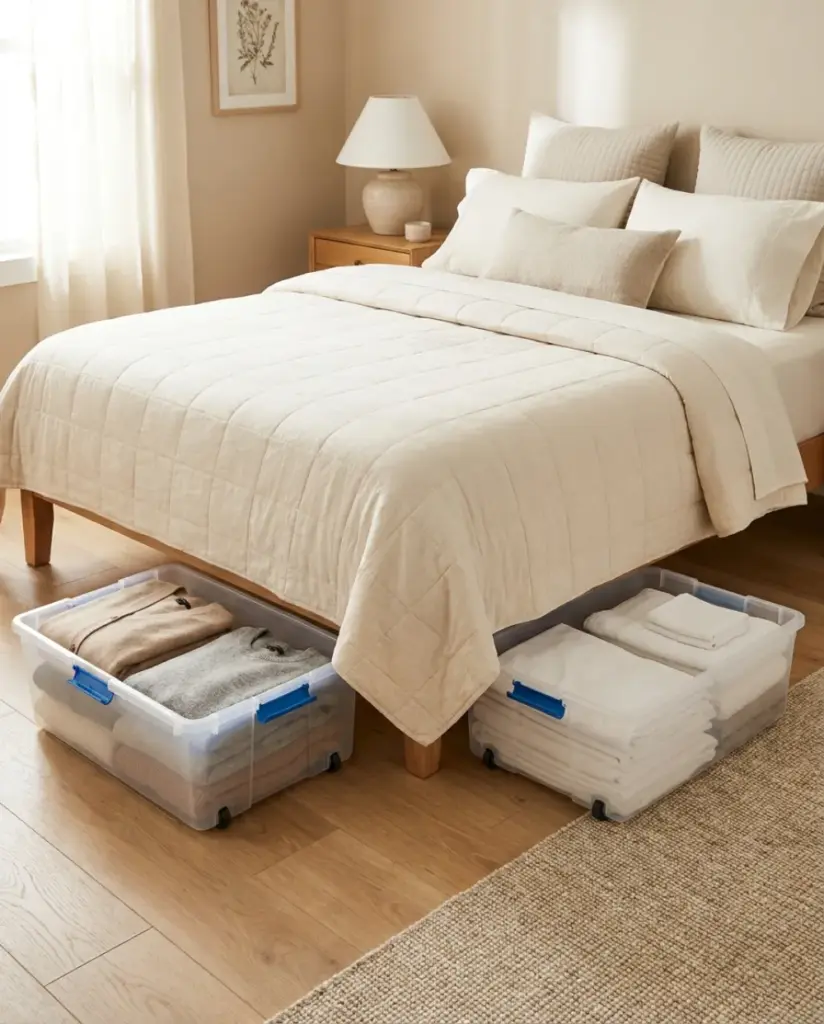
How do you organize under bed storage?
You organize under bed storage in six steps: pull everything out and clean, measure the clearance, decide what belongs under the bed, choose lidded containers that fit, zone the space by how often you need each item, and label the visible ends. Organizing under bed storage starts with cleaning, because the floor under a bed collects dust that a quick vacuum usually misses. The EPA’s asthma trigger guidance notes that every home has dust mites and that they live in mattresses, pillows, bedcovers, and fabric items.
Step 1: Pull everything out and clean under the bed
Slide every bin, bag, and stray shoe out from under the bed. Vacuum the floor and the bed frame rails, and wipe down any containers you plan to reuse. Toss anything that is torn, dusty beyond saving, or forgotten for good reason.
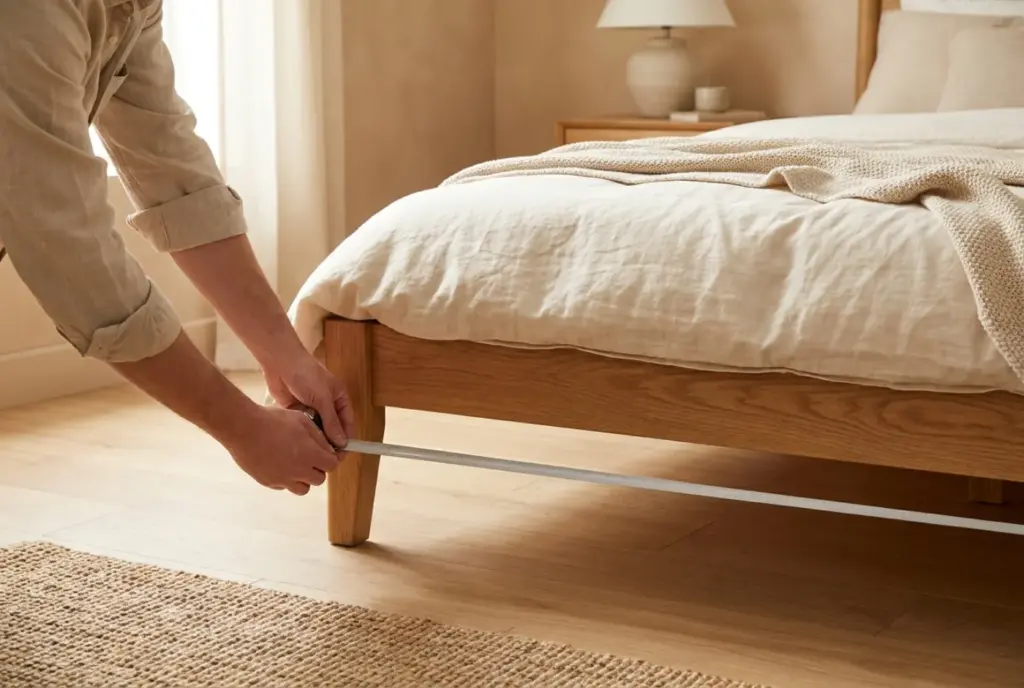
Step 2: Measure the clearance under the bed
Measure the height from the floor to the bottom of the bed frame, plus the depth and width of the open space. Subtract about an inch from the height so containers slide in without scraping. Write the numbers down before you shop:
- Height: floor to the lowest point of the frame or slats
- Depth: front edge of the bed to the wall or headboard side
- Width: the open run between the legs or center supports
Step 3: Decide what belongs under the bed
Decide what goes under the bed after the closet and dresser are sorted, so under bed storage holds overflow, not everyday items. The bedroom closet should carry the daily load, which is why closet organizing usually comes before any under-bed project. Good candidates are items you use a few times a year and that store flat.
Step 4: Choose lidded containers that fit
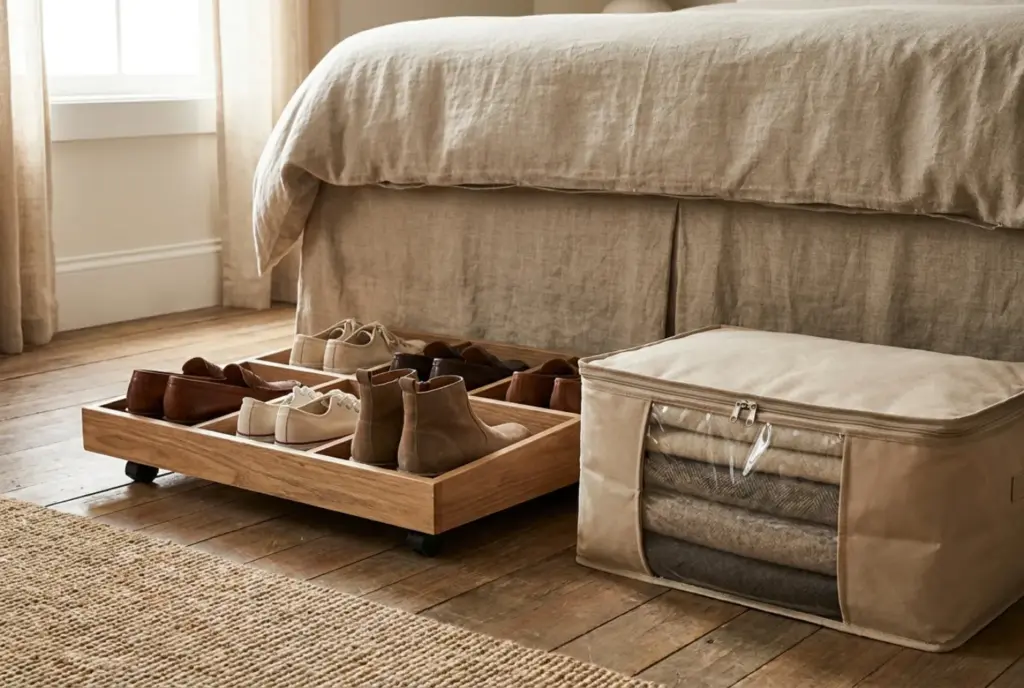
Choose containers by what they hold and how often you pull them out. Four types cover most bedrooms:
- Rolling plastic bins with latching lids for seasonal clothing and shoes
- Zippered fabric bags with a clear window for bedding and pillows
- Shallow drawers on casters for items you reach for every week
- Flat shoe trays with dividers for pairs that rotate by season
Step 5: Zone the space by how often you need each item
Zone under bed storage from the outside in. Items you use weekly go along the edges you can reach from the side of the bed. Seasonal bins go in the middle row. Keepsakes and rarely used items go in the hard-to-reach center, under the middle of the mattress.
Step 6: Label the visible ends and keep a list
Label the end of each bin that faces out, so you can read it without pulling the container. Keep a short list of what is under the bed on your phone, and update it each time the seasons change. Knowing what to put in those bins is the next decision.
What should you store under the bed?
You should store items under the bed that you need a few times a year, that stack or lie flat, and that hold up well in a closed container. Under-bed storage works best as a second closet for overflow. Items that suit the space:
- Off-season clothing, coats, and sweaters
- Spare sheets, blankets, and guest pillows
- Shoes and boots that rotate with the seasons
- Wrapping paper, gift bags, and ribbon
- A rotating bin of toys or games for a child’s room
- Keepsakes and photos in lidded, acid-free boxes
For clothing, our guide on how to store seasonal clothes covers cleaning, folding, and the right bags before anything goes into a bin. Some items do not belong under the bed at all.
What should you not store under a bed?
You should not store important documents, food, damp items, or loose odds and ends under a bed. Documents and medications need to be easy to grab in an emergency, and food draws pests. Avoid these under the bed:
- Passports, insurance papers, and other documents you might need in a hurry
- Food, snacks, and pet food
- Anything damp, such as gym clothes or wet boots
- Loose items with no container, which gather dust and get lost
- Very heavy items that strain slats or flooring
Fabric items need extra care. Dust mites thrive in temperatures around 70 degrees and humidity above 50 percent, according to the Asthma and Allergy Foundation of America, so store bedding and clothing in clean, closed containers rather than loose bags.
Is under-bed storage a good idea?
Yes, under-bed storage is a good idea when every item is in a lidded container and the floor under the bed gets cleaned regularly. It adds real storage to small bedrooms without adding furniture. The trade-offs are dust, harder access, and less airflow around the bed.
Moisture is the main risk for stored fabric. The EPA’s guide to mold and moisture recommends keeping indoor humidity below 60 percent and drying damp items within 24 to 48 hours. Ways to keep under bed storage fresh:
- Pack only clean, fully dry clothing and linens
- Use lidded bins instead of open baskets
- Pull containers out to vacuum once a month
- Check bins each season for odors or moisture
How do you create storage under a bed with little space?
You create storage under a bed with little space by raising the bed on risers, switching to a storage bed with drawers, or using low-profile rolling trays. Many modern bed frames sit only a few inches off the floor, which rules out standard bins. Options to gain under-bed storage:
- Bed risers that add several inches of clearance
- A platform or captain’s bed with built-in drawers
- Low rolling trays made for tight clearances
- A bed skirt to hide bins and keep out some dust
In tight rooms, under-bed storage works hand in hand with a smart layout. Our tips on how to organize a small bedroom show how to balance the bed, closet, and dresser so nothing feels crowded.
How do you organize under bed storage in a kid’s room?
You organize under bed storage in a kid’s room with lightweight rolling bins that a child can pull out and push back alone, each holding one category. Shallow bins with open tops or easy lids work better than latches for young children. Categories that fit well under a child’s bed:
- A rotation bin of toys that swaps with the toys on the shelf
- Art supplies and coloring books in a flat drawer
- Next-size-up clothing and hand-me-downs
- Extra blankets and a sleeping bag for sleepovers
Picture labels on the bin ends help kids who cannot read yet put things back. Our guide to organizing toys and a playroom covers how to rotate toys so the under-bed bin stays useful. The same thinking applies to every bedroom in the house.
How does under-bed storage fit into a whole-bedroom organizing plan?
Under-bed storage fits into a whole-bedroom organizing plan as overflow space, after the closet and dresser hold the daily load. Kalli Erwin and the Just Right team, working in homes across the Metro East service area, start with the closet, edit clothing and linens with you, and then decide what belongs under the bed, so nothing gets stored just to get it out of sight.
Clients buy recommended bins, risers, and drawers themselves, using the product research and shopping links Kalli provides. Donation haul-away is included with each session, so the pieces you let go of leave that day. If you want to start on your own, our closet organizing guide covers the first step before any under-bed project.
Frequently asked questions
What is the best container for under bed storage?
The best container for under bed storage is a rolling plastic bin with a latching lid, sized about an inch shorter than your bed clearance. Zippered fabric bags work well for bedding, and shallow drawers on casters suit items you use every week.
How much clearance do you need for under bed storage?
The clearance you need for under bed storage depends on the container, since low-profile trays fit tighter spaces than standard bins. Measure from the floor to the lowest point of the frame and buy containers about an inch shorter.
Is it bad to store clothes under your bed?
It is not bad to store clothes under your bed if they are clean, fully dry, and packed in lidded containers. Loose clothes collect dust, so bins or zippered bags are the better choice.
How often should you clean under the bed?
You should clean under the bed about once a month, pulling out containers and vacuuming the floor and frame. Wipe the bins each season when you swap clothing.
How do you hide under bed storage?
You hide under bed storage with a bed skirt, a bedspread that reaches the floor, or a storage bed with drawer fronts. Matching containers in one neutral color also look tidier when they show.
Want a bedroom that stays easy to keep?
Under-bed storage works best when the closet and dresser are already working for you. Kalli Erwin and the Just Right team organize bedrooms and closets across the Metro East, with donation haul-away included at every session. Request a free organizing consultation to plan your bedroom storage.
Articles are researched and drafted with AI-assisted tools, illustrated with AI-generated images, and reviewed by Kalli Erwin before publishing.