
What is the best way to store seasonal clothes?
The best way to store seasonal clothes is to sort them, clean everything, pack each fabric in the right container, and keep the containers in a cool, dry place you can reach at the next season change. Stored clothes stay in good shape when they go away clean, dry and protected from pests. The method follows six steps:
- Sort seasonal clothes before you store them.
- Wash or dry clean everything first.
- Choose the right container for each fabric.
- Label and list what is in each bin.
- Pick a cool, dry storage spot.
- Swap seasons on a set schedule.
A seasonal swap is one of the easiest ways to free up closet space without letting go of anything you love, and it is a regular part of our closet organizing work.
1. Sort seasonal clothes before you store them
Sorting seasonal clothes before you store them means you spend bin space and storage effort only on seasonal clothes you will wear again. Go through each piece as it comes off the rod or out of the drawer, and decide before it touches a bin.
- Store: pieces you wore this season and want next year.
- Repair: loose buttons, broken zippers and fallen hems.
- Donate: clean items in good condition that you skipped all season.
- Recycle: worn-out pieces that are past wearing.
Letting go of what you skipped matters beyond the closet. The EPA estimated that the United States generated 17 million tons of textile waste in 2018, with a recycling rate of 14.7 percent. If paring down a wardrobe feels hard, our guide on sorting through clothes walks through the decisions.
2. Wash or dry clean seasonal clothes before storing them
Washing or dry cleaning seasonal clothes before storing them is the most important protection you can give them. Body oils, food spots and sweat can set into stains over months and attract fabric pests.
- Follow the care label for every piece.
- Empty all pockets.
- Let everything dry completely before it goes in a bin.
The University of California’s guide to clothes moths notes that insects are less likely to feed on clean fabrics than on soiled ones, and that items should be clean and pest free before storage. Wool, cashmere and fur blends need that care most.
3. Choose the right container for each seasonal fabric
Choosing the right container for each seasonal fabric protects the clothes and makes the bins easy to stack and find. Match the container to what goes inside.
Cotton, denim and synthetics
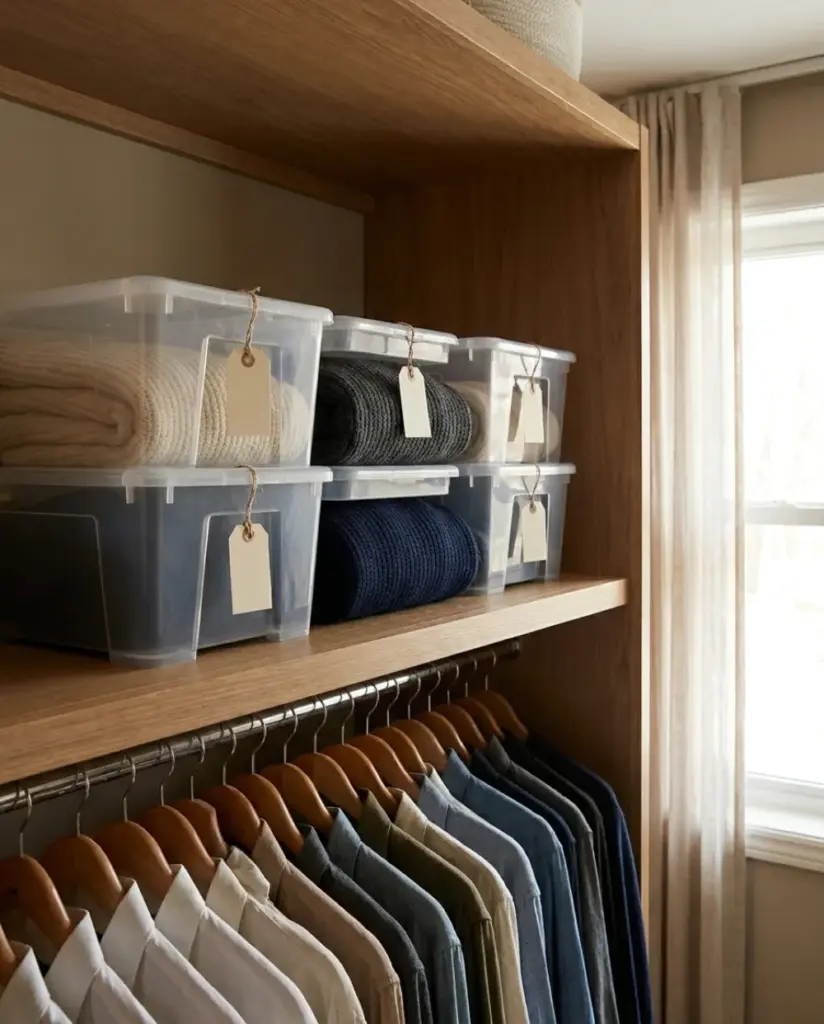
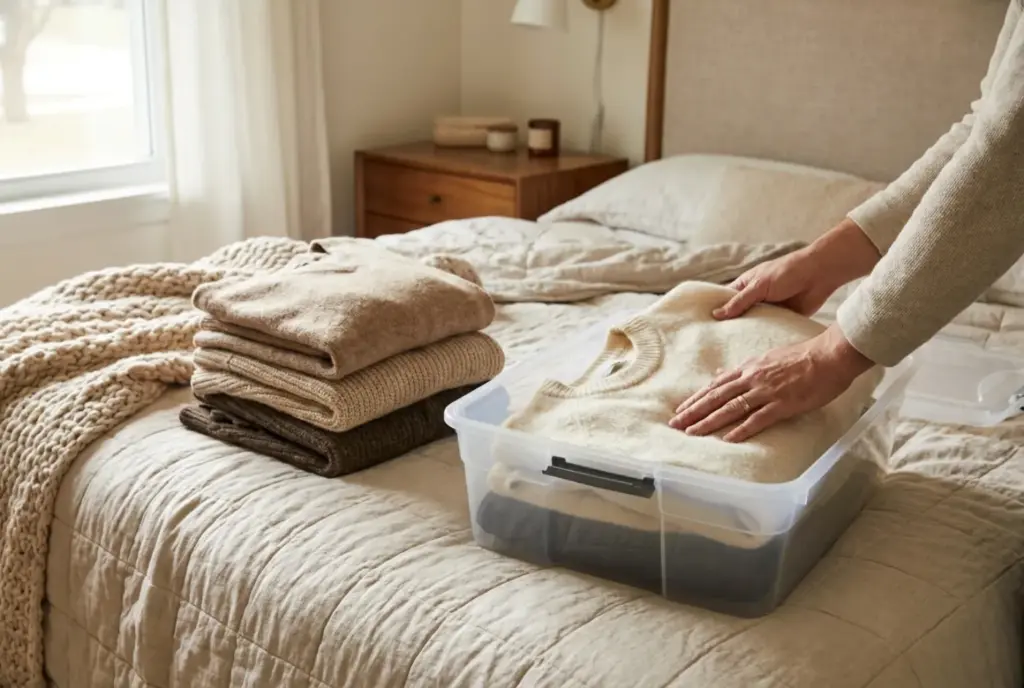
Lidded clear plastic bins keep out dust and let you see the contents. Fold items loosely instead of packing them tight.
Wool, cashmere and other knits
Fold knits rather than hanging them so the shoulders do not stretch. Pack them clean in a sealed, airtight bin to keep moths out.
Coats, suits and formalwear
Hang structured pieces in breathable garment bags in a secondary closet. Shoulder-shaped hangers help them keep their form.
Bulky bedding and fleece
Vacuum compression bags save the most space for bulky synthetic items such as fleece throws and puffy comforters.
Shoes and boots
Clean and dry shoes and boots before storing them, then stuff them with paper so they hold their shape. Store them in their own bin so dirt from the soles never touches folded clothes.
4. Label and list what is in each seasonal clothes bin
Labeling and listing what is in each seasonal clothes bin saves you from opening every container to find one sweater. A short list on the end of each bin is enough.
- Label the short end of the bin so you can read it when bins are stacked.
- Note the season and the person, such as “winter, kids.”
- Keep a simple list on your phone of what went into each bin.
- Store one small bin of transition pieces where you can grab it first.
Clear bins plus a label work best. You see colors at a glance and still know exactly what is inside. Bins that stay in the main closet need a planned shelf, and our guide on how to organize a closet shows how to lay one out.
5. Pick a cool, dry spot to store seasonal clothes
Picking a cool, dry spot to store seasonal clothes prevents the mildew and musty smells that ruin stored clothes. Humidity is the main risk to seasonal clothes storage in Illinois homes, where damp basements and hot summer attics are common.
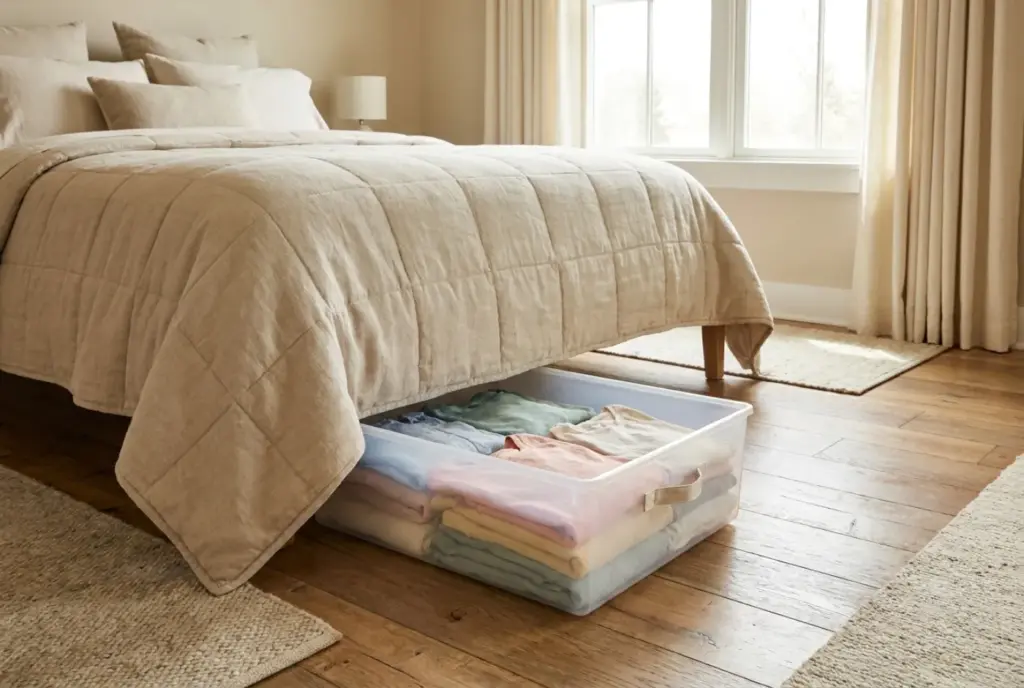
- Good spots: a closet top shelf, under the bed, a spare-room closet.
- Riskier spots: an unfinished basement floor or an unvented attic.
- Raise bins off concrete floors on a shelf.
The EPA recommends keeping indoor humidity below 60 percent, ideally between 30 and 50 percent, to keep mold from growing. If the basement is the only option, our guide on how to organize a basement shows how to set up dry shelving.
6. Swap seasonal clothes on a set schedule
Swapping seasonal clothes on a set schedule turns storage into a quick routine instead of an all-day project. Two swaps a year cover most households in the Metro East.
- Spring swap: pack heavy coats, sweaters and boots once the cold weather breaks.
- Fall swap: pack shorts, sandals and swimsuits once nights turn cool.
- Transition bin: keep a light jacket and a few layers out year round.
Each swap is also a chance to edit again. Anything still unworn after a full year is a good candidate for the donation bag. Try on kids’ clothes at every swap too, since a winter coat that fit in March may be too small by November, and outgrown pieces can go straight to a sibling bin or the donation bag.
Where should you store seasonal clothes in a small home?
The best places to store seasonal clothes in a small home are under the bed, on the top closet shelf and inside luggage you already own. Each spot uses space that usually sits empty.
- Low-profile lidded bins or rolling boxes under the bed.
- Stacked clear bins on the top shelf of a closet.
- Suitcases filled with off-season clothes between trips.
- Ottomans or benches with storage inside.
Small bedrooms reward a plan for every inch, and our guide on how to organize a small bedroom covers under-bed and closet space in detail.
How do you protect stored seasonal clothes from moths?
The way to protect stored seasonal clothes from moths is to store them clean, in sealed containers, and to check them at each swap. Clothes moth larvae feed on wool, fur and blends that contain wool.
- Store wool and cashmere only after washing or dry cleaning.
- Use airtight bins for anything made of animal fibers.
- Shake out and inspect stored pieces at every season change.
Cedar is a weaker defense than many people expect. The same University of California guide reports that the effectiveness of cedar chests and closets is debatable and that cedar loses its effect after several years.
How do professional organizers handle a seasonal closet swap?
Professional organizers handle a seasonal closet swap as a chance to reset the whole closet, not just to move bins. The swap is when you see exactly what the household wears.
- We edit each person’s wardrobe with them before anything is packed.
- We set up bins, labels and an inventory the family can repeat alone.
- We research bins and hangers and send shopping links, and clients buy what the plan calls for.
- We take the donation bags with us at the end of the session.
Our team covers Alton, Troy, Edwardsville and the surrounding towns, which are listed on our organizing service areas page.
Frequently asked questions
What are some good storage ideas for winter clothes?
Good storage ideas for winter clothes include clear lidded bins on a closet top shelf, airtight bins for wool and cashmere, garment bags for coats and vacuum bags for bulky synthetic fleece. Store everything clean and in a dry room, not on a damp basement floor.
Is it better to store clothes in plastic bins or cardboard boxes?
Lidded plastic bins are better than cardboard boxes for storing clothes because cardboard absorbs moisture and gives pests an easy way in. Clear bins also let you see what is inside without opening them.
Should you hang or fold clothes for storage?
Fold knits, sweaters and casual clothes for storage, and hang structured coats, suits and formalwear in breathable garment bags. Hanging heavy knits for months stretches the shoulders.
Can you store clothes in vacuum bags long term?
Vacuum bags work best for bulky synthetic items such as fleece and comforters over a single season. For wool, cashmere and structured pieces, a sealed bin or a garment bag keeps the shape better.
Want help with your seasonal closet swap?
Kalli Erwin and the Just Right team set up closets and storage systems that make each season change quick, with bins, labels and an inventory your family can repeat. We research products, send shopping links and haul away donations at the end of each session. Request a free organizing consultation to plan your next swap.
Articles are researched and drafted with AI-assisted tools, illustrated with AI-generated images, and reviewed by Kalli Erwin before publishing.