
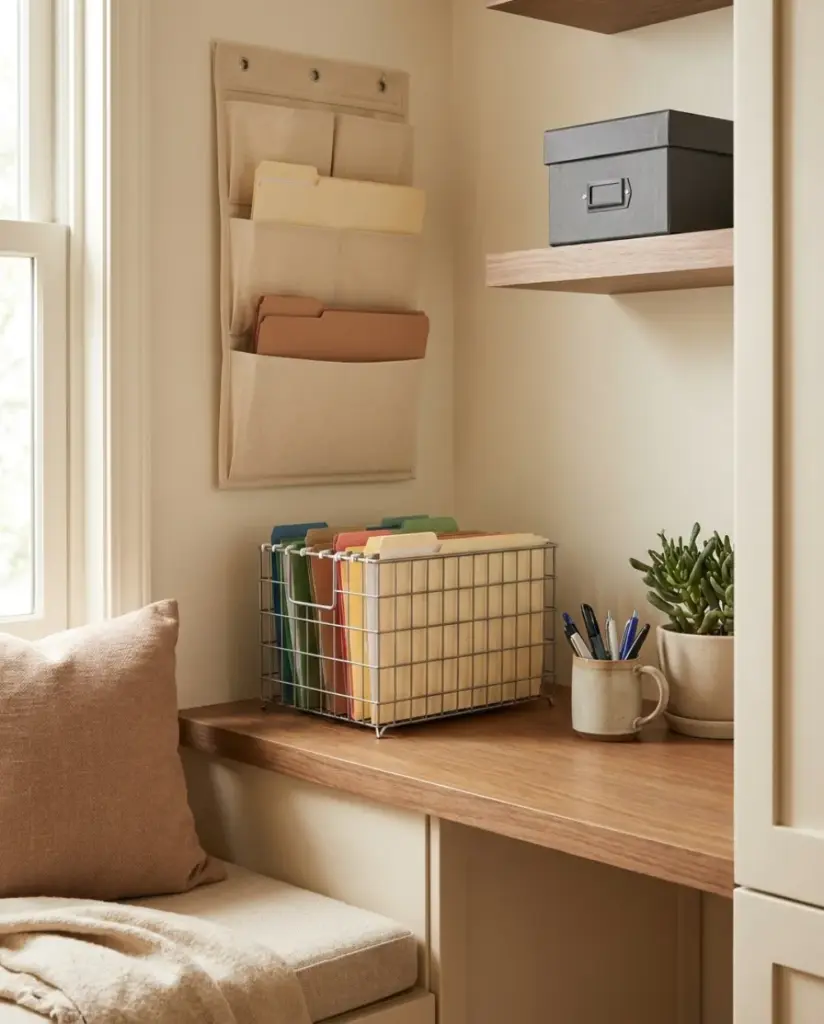
1. How do you start organizing paperwork at home?
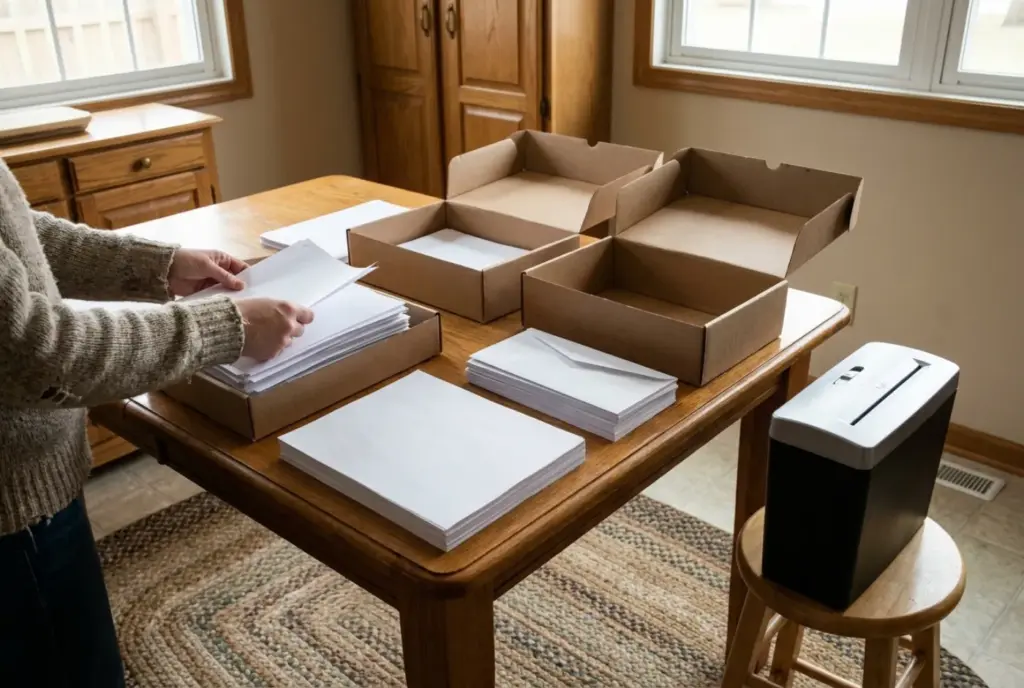
You start organizing paperwork at home by gathering every loose paper from the house into one spot and sorting it into three piles: recycle, shred and keep. Pulling papers from the kitchen counter, desk drawers, bags and the car shows you the full volume before you choose folders or bins.
- Clear a kitchen table or a large flat surface
- Collect papers from counters, drawers, purses, the car and the mail basket
- Set out three boxes or bags labeled recycle, shred and keep
- Work in one-hour sessions so decisions stay quick
Professional organizers use the same gather-and-sort method in whole-home organizing, because a filing system only works once you know what needs filing. Fast sorting depends on clear rules for what stays and what goes.
2. Which papers should you shred, recycle or keep?
Shred papers with personal or financial details, recycle papers with no personal information, and keep only documents you need for taxes, legal proof or active tasks. Most of the paper in a typical pile falls into the first two groups.
Papers to recycle
- Junk mail, catalogs and flyers without your account details
- Old manuals for products you can find online
- Expired coupons, menus and event notices
Papers to shred
- Old bank and credit card statements past their keep date
- Pre-approved credit offers and convenience checks
- Anything showing a Social Security number, account number or date of birth
Shredding protects you from identity theft, and USA.gov’s identity theft guide explains what to do if your information is stolen. The keep pile still needs one more filter: how long each paper actually has to stay.
3. How long should you keep paperwork?
Keep paperwork for as long as it serves a tax, legal or warranty purpose: most tax records for at least three years after you file, property records until you sell and the tax period ends, and vital records permanently. The IRS guidance on how long to keep records sets three years as the general rule and seven years if you claim a loss from worthless securities or a bad debt deduction.
| Paperwork | How long to keep it |
|---|---|
| Tax returns and supporting records | At least 3 years after filing; 7 years for some loss claims |
| Home purchase and improvement records | Until the tax period ends for the year you sell |
| Pay stubs | Until they match your year-end tax form |
| Monthly bills and bank statements | Until paid or reconciled, unless needed for taxes |
| Birth certificates, passports, Social Security cards | Permanently |
Which paperwork should you keep forever?
- Birth, marriage, divorce and death certificates
- Passports, Social Security cards and military records
- Adoption and citizenship papers
- Wills, trusts and powers of attorney, plus the name of the attorney who holds originals
Check with a tax professional for your own situation, and then give the papers you keep a simple home.
4. What categories should you use to file home paperwork?
File home paperwork in three tiers: active papers you need this month, reference papers you need occasionally and vital documents you must protect. Three tiers keep daily papers within reach without mixing them into long-term files.
Active papers
- Bills to pay and forms to sign
- School papers and permission slips
- Appointment notices and items waiting on a reply
Reference papers
- Taxes, by year
- Home: mortgage or lease, insurance and repair records
- Medical and dental records
- Vehicles: titles, loans and maintenance receipts
- Kids: report cards, health forms and activity records
Vital documents
- Birth and marriage certificates, passports and Social Security cards
- Wills, powers of attorney and deeds
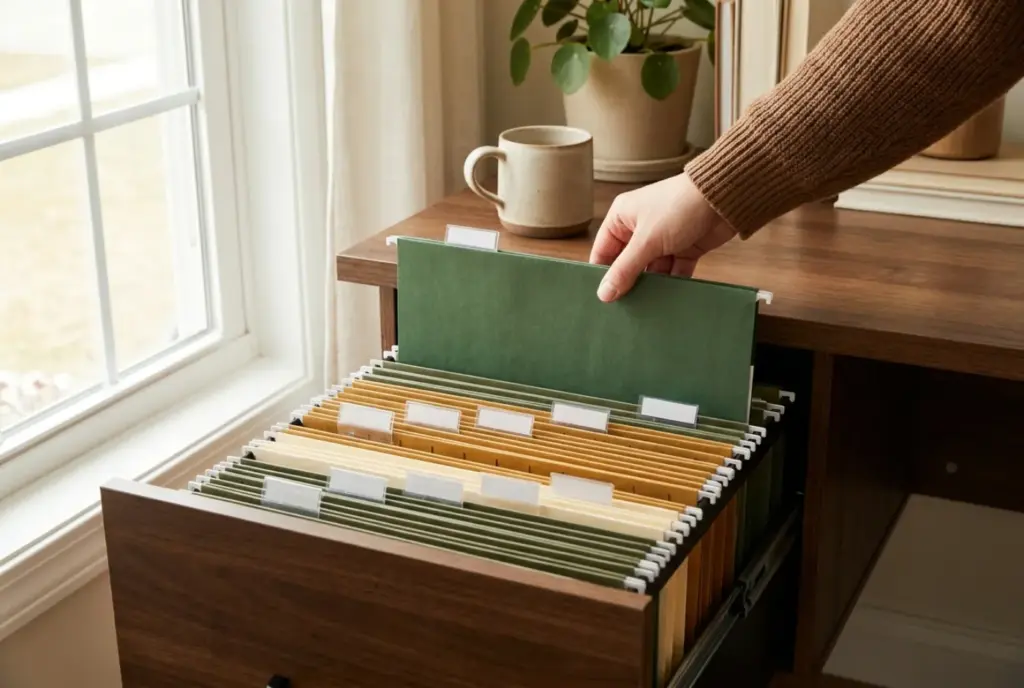
Give each tier its own folder color, such as green for active, blue for reference and red for vital, so anyone in the family can see where a stray paper belongs. A label on every folder tab finishes the system and keeps categories from drifting over time.
5. Where should you store important documents at home?
Store important documents at home in a fire-resistant, waterproof box or safe, and keep digital copies in a second location. Ready.gov’s financial preparedness guidance recommends keeping critical documents in a safety deposit box, on an external drive or in the cloud so you can reach them after a disaster.
- Use the fire-resistant box for vital documents only
- Keep reference files in a filing drawer or labeled file box
- Store active papers in a desktop file or wall pocket
- Tell one trusted person where the box and passwords live
Families helping an older relative move often find these papers scattered, and our guide on how to help aging parents downsize covers sorting a parent’s records with care. Storage handles the papers you already have, and a daily habit handles the new ones.
6. How do you manage mail and incoming paper?
Manage mail and incoming paper by giving it one landing spot near the door and sorting it every day in about five minutes. Recycle junk mail before it lands, drop bills into the active file and pass school papers straight to their folder, so incoming paper never becomes a new pile.
- Place a wall file, tray or basket by the main entry
- Keep a small recycling bin and shredder nearby
- Switch to electronic statements where you can
- Do a 10-minute weekly reset of the active file
How do you cut down on paper mail?
- Call or email catalog companies and ask to be removed from their lists
- Choose paperless billing in each bank and utility account
- Ask schools and activities to send forms by email
Our entryway organizing guide shows how to set up a drop zone for mail, keys and bags. If papers tend to land in the kitchen instead, one cleared drawer can serve as the active file, and our guide to organizing kitchen cabinets and drawers shows how to free one up.
How do you organize paperwork without a filing cabinet?
You organize paperwork without a filing cabinet by using an accordion file, a lidded file box or labeled binders for reference papers. A small home can hold a full paper system on one shelf or in one cabinet drawer.
- Accordion file for active papers and the current tax year
- Hanging-file box with a lid for reference categories
- Three-ring binders with sheet protectors for manuals and records
- Magazine holders on a shelf for kids’ school papers
Should you scan your paperwork and go paperless?
Scan paperwork you only need to read, such as receipts, warranties and kids’ artwork, and keep originals of vital and legal documents. A scanning app on your phone and a cloud folder named by category can replace several file drawers.
- Name digital folders to match your paper categories
- Scan receipts the day you get them, then recycle the paper
- Back up digital files in two places
- Keep paper originals of anything with a raised seal or signature
How does paperwork fit into a whole-home organizing plan?
Paperwork fits into a whole-home organizing plan as one of the systems that touches every room, from the entryway mail drop to the kitchen counter and the home office. Organizing papers alongside the spaces where they pile up keeps the system working long after setup.
When Just Right Organizing works through a home, Kalli and her team build simple paper flows that match how your family lives, and they research filing products and send shopping links instead of selling supplies. In-person help covers the Alton, Troy and Metro East service area. Our article on whether hiring a professional organizer is worth it explains what a session includes.
Frequently asked questions
What important documents should you keep at home?
Keep birth certificates, passports, Social Security cards, marriage certificates, wills, powers of attorney, property deeds and vehicle titles at home in a fire-resistant box. Store digital copies in a second secure location.
What is the best way to organize documents at home?
The best way to organize documents at home is to sort them into active, reference and vital groups, then give each group its own container. Active papers stay within reach, reference files go in a drawer or file box, and vital records go in a fire-resistant box.
How do you deal with mail every day?
Deal with mail every day by opening it at one landing spot and sorting it right away into recycle, shred and act. Bills go into the active file, and junk mail goes straight into the recycling bin.
How long should you keep bank statements?
Keep bank statements until you have checked them against your records, and keep any that support a tax return for at least three years after filing. Shred older statements rather than recycling them.
How often should you clean out your files?
Clean out household files once a year, ideally after you file taxes in the spring. A yearly purge moves old tax years to archive storage and sends expired papers to the shredder.
Want a paper system that sticks?
A paper system lasts when it matches the places paper actually lands in your home. Kalli and the Just Right team set up mail drops, files and command centers with you. Request a free organizing consultation to get your papers in order.
Articles are researched and drafted with AI-assisted tools, illustrated with AI-generated images, and reviewed by Kalli Erwin before publishing.