

1. When should you talk to aging parents about downsizing?
Talk to aging parents about downsizing early, before a fall, a diagnosis or a house sale forces fast decisions. Early talks give parents time to choose what happens to their home and belongings. That matters because the AARP 2021 Home and Community Preferences Survey found that 77 percent of adults 50 and older want to remain in their homes for the long term, so a move can feel like a real loss.
Many families use the 40-70 rule as a prompt: when adult children are around 40 and parents are around 70, it is time to start the conversation.
How do you start the downsizing conversation?
- Pick a calm, private moment, not a holiday dinner
- Ask about their goals before sharing your worries
- Name the benefits: fewer stairs, less yard work, lower upkeep and more time with family
- Let them talk about what the house means to them
- Agree on one small next step instead of a full plan
Some families also bring in downsizing help from a professional organizer so the talk stays practical. Once parents agree to a move, the floor plan of the new home becomes the most useful tool in the process.
2. How do you help parents decide what to keep?
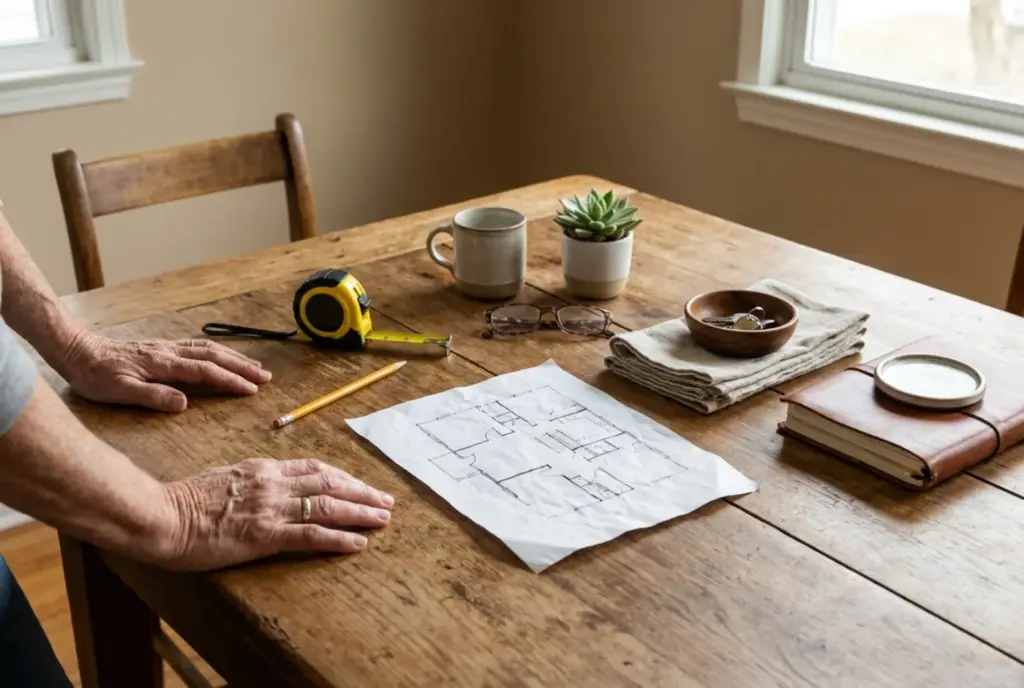
Help parents decide what to keep by asking which belongings they use, which they love and which will fit in the new home. Start with the floor plan, because the new space sets the limit and turns the decision into “what fits and what do you use” instead of “what do you love less.”
What questions help parents decide what to keep?
- Do you use this every week or every season?
- Is there a place for it in the new home?
- Would you buy it again today?
- Does someone in the family want it and have room for it?
- Is it a duplicate of something you are already keeping?
Parents decide faster when the questions stay the same from room to room, and when adult children ask them gently instead of making the call for them.
Measure the new home first
- Get the floor plan or measure each room of the new home
- Measure the large furniture parents want to bring
- Count kitchen cabinets, closets and shelves in the new space
- Mark which pieces fit before anyone sorts small items
Use five simple sorting categories
- Keep: daily-use items and favorites that fit the new plan
- Family: items a named relative has asked for and has room to take
- Donate: good-condition items parents no longer need
- Sell: valuable furniture, collections or tools worth listing
- Decide later: one small, capped box for hard choices
Our downsizing checklist turns these categories into a room-by-room list you can print. Sorting goes faster when the first rooms carry little emotion.
3. Where should you start downsizing a parent’s home?
Start downsizing a parent’s home in a low-emotion space such as a linen closet, a pantry or a guest bathroom. Quick wins in these areas build trust and show parents how the sorting process works before you reach photos, letters and heirlooms.
- Linen closets, using the steps in our linen closet guide
- Pantries and kitchen cabinets with expired food and duplicate pans
- Guest rooms and spare bathrooms
- Garages and basements, which often hold the most volume
- Bedrooms, offices and sentimental storage last
How long should each downsizing session last?
Keep each downsizing session to two or three hours with a clear stopping point. Short sessions protect a parent’s energy and leave room for stories. End each session by taking donations to the car, so sorted items leave the house the same day and parents see real progress.
4. How do you handle sentimental items when parents downsize?
Handle sentimental items by slowing down, letting parents tell the story behind each piece and keeping the best examples instead of the whole collection. A parent who keeps three favorite quilts often feels better about letting go of the rest.
- Photograph large or bulky keepsakes before they leave the house
- Choose a few display pieces for the new home
- Record stories about heirlooms in a notebook or a phone video
- Pass items to family members while parents can see them enjoyed
- Never discard anything behind a parent’s back
Respecting a parent’s pace keeps the trust you need for the bigger decisions about furniture and household goods.
5. What do you do with furniture parents no longer need?
Offer furniture to family first, then sell valuable pieces and donate the rest to charities that accept household goods. Habitat for Humanity ReStores accept gently used furniture, appliances and housewares, and many locations offer free pickup of large items.
- Share photos with family and set a deadline for claims
- List antiques and collections with a local appraiser or consignment shop
- Schedule donation pickups before moving day
- Shred old financial papers rather than tossing them
Should parents sell or donate household items?
Parents should sell only the items worth the time it takes to list them, such as quality furniture, antiques and tools, and donate the rest. Selling dozens of small items can stretch a move by weeks, while donation pickups clear a house in a day. Clearing the old home is half the work, and the new home needs the same care.
6. How do you set up the new home after downsizing?
Set up the new home by unpacking the bedroom, bathroom and kitchen first, so parents can sleep, wash and eat on the first night. Arrange familiar furniture and photos in a similar way to the old house, which helps the new space feel like home.
- Pack and label boxes by room using our packing checklist
- Keep medications, glasses, chargers and paperwork in one open-first box
- Place everyday items between waist and shoulder height
- Clear walkways and keep cords off the floor
Our unpacking and home setup service handles this step. Familiar routines, such as coffee in the same mug in the same spot, help parents settle in during the first weeks.
What should you do if aging parents refuse to downsize?
If aging parents refuse to downsize, listen to their reasons, focus on safety and offer smaller changes instead of pushing a move. A parent may be protecting independence, memories or a sense of control.
- Ask what worries them most about moving
- Suggest sorting one room to make the current home easier to live in
- Involve a doctor, faith leader or financial advisor they trust
- Explore aging-in-place options and local services
The National Institute on Aging’s guide to aging in place covers home changes and in-home services that let parents stay longer and more safely. Local area agencies on aging can also point families to meal programs, transportation and in-home help.
How can a professional organizer help parents downsize?
A professional organizer helps parents downsize by acting as a calm, neutral guide who keeps sorting moving while family members focus on support. Outside help often eases tension between siblings and keeps decisions tied to the new floor plan.
Just Right Organizing includes downsizing in its home organizing work, along with packing for the move, unpacking and setup. Kalli Erwin and her team are based in Alton, Illinois and work across the Metro East, and donation haul-away is included in every session. Packages start at $850, and our article on whether hiring a professional organizer is worth it explains what to expect.
Frequently asked questions
What is the 40-70 rule for aging parents?
The 40-70 rule is a guideline that says families should start talking about aging and housing plans when adult children are around 40 and parents are around 70. Starting at that point leaves time to plan before a health event forces a fast move.
At what age do most seniors downsize?
Seniors downsize at no single set age; the move usually follows a change such as retirement, the loss of a spouse, trouble with stairs or a home that has become too much to maintain. Planning before that change gives parents more say in the outcome.
How long does it take to help parents downsize?
Helping parents downsize a full house usually takes several weeks of short sessions, depending on the size of the home and how many sentimental items need decisions. Two to three hour sessions keep the pace manageable for older adults.
Is there a downside to downsizing?
Yes, downsizing can bring grief, stress and a sense of lost independence, even when the move is the right choice. Involving parents in every decision and keeping meaningful pieces visible in the new home softens that loss.
Should you hire someone to help parents downsize?
Hiring a professional organizer makes sense when siblings live far away, emotions run high or the house holds decades of belongings. A neutral organizer keeps sorting on schedule and lets family members focus on support.
Need a calm partner for your parents’ downsizing?
Downsizing goes more smoothly when someone outside the family keeps the plan moving. Kalli and the Just Right team sort, pack and set up the new home with your parents, and donation haul-away is part of every session. Request a free organizing consultation to talk through the move.
Articles are researched and drafted with AI-assisted tools, illustrated with AI-generated images, and reviewed by Kalli Erwin before publishing.