
How to organize bathroom cabinets in 7 steps
Organizing bathroom cabinets comes down to three moves: clear out the bathroom cabinets, sort what stays by category, and store each category by how often you reach for it. A typical bathroom vanity and mirror cabinet take one to two hours.
1. Empty and wipe every shelf
Take everything out of the bathroom cabinets, vanity drawers, and mirror cabinet and set it on a towel. Wipe the shelves and check under the sink for drips or water stains before anything goes back. A slow leak found now is far cheaper to fix than a ruined cabinet floor later.
2. Check dates and toss what is old
Look for expiration dates on sunscreen, medicine, and skincare, and for changes in smell, color, or texture. Eye products wear out fastest; the FDA notes that manufacturers usually recommend discarding mascara two to four months after purchase. Toss dried out polish, separated lotion, and samples you will never use. Unopened products you no longer want can go to a friend or a local shelter instead of the trash.
3. Group what is left by category
Sort the keepers into groups that make sense for your household:
- Daily skincare and makeup.
- Hair products and tools.
- Oral care.
- First aid and bandages.
- Shaving supplies.
- Cleaning supplies.
- Backstock of soap, toothpaste, and toilet paper.
4. Assign zones by how often you use them
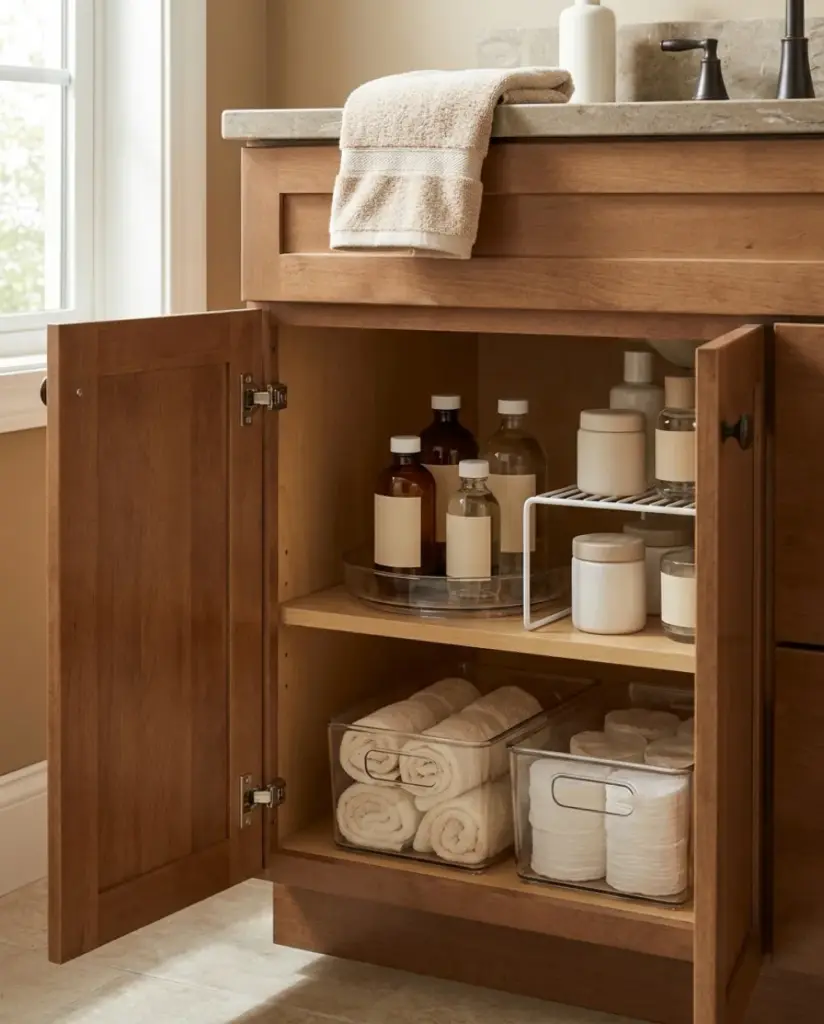
Put daily items at eye level in the mirror cabinet or the top vanity drawer. Weekly items go lower or toward the back of the bathroom cabinet. Backstock goes up high or into another closet entirely. In a shared bathroom, give each person their own shelf or bin so morning routines do not collide.
5. Add risers, turntables, and pull-out bins
A shelf riser doubles the usable space on a bathroom cabinet shelf. A turntable keeps bottles from getting lost in a deep corner. Pull-out bins or a two tier sliding drawer under the sink let you reach the back without unloading the front.
6. Use the inside of the doors
Adhesive hooks and slim baskets on bathroom cabinet doors hold a hair dryer, brushes, or washcloths. Measure the shelf depth first so the door still closes, and keep anything heavy off adhesive hooks.
7. Keep backstock somewhere else
Extra toilet paper, bulk shampoo, and spare towels take up prime space. Store one backup of each item in the bathroom and the rest in a hall or linen closet; our guide to organizing a linen closet shows how to set up that backstock shelf. Some items should leave the bathroom altogether.
What should not be stored in bathroom cabinets?
Medicine, extra towels and paper goods, and anything that degrades in heat and humidity should not be stored in bathroom cabinets. Shower steam makes the bathroom one of the most humid rooms in a home.
Medicine is the most common mistake. The FDA warns that improper storage such as a damp bathroom cabinet can make medicines less effective even before their expiration date, and it recommends a cool, dry place such as a dresser drawer, closet shelf, or kitchen cabinet.
- Medicine and vitamins: move them to a cool, dry closet or kitchen cabinet, out of children’s reach.
- Extra towels and linens: they can pick up a musty smell in steam.
- Bulk paper goods: moisture softens and warps them.
- Jewelry: humidity can tarnish silver and plated pieces.
- Perfume and some makeup: heat and steam shorten their life.
Cleaning chemicals are a judgment call. If you keep them under the bathroom sink, use a child safety latch and keep them in their original containers, which matters most in the cabinet with pipes.
How do you organize under a bathroom sink?
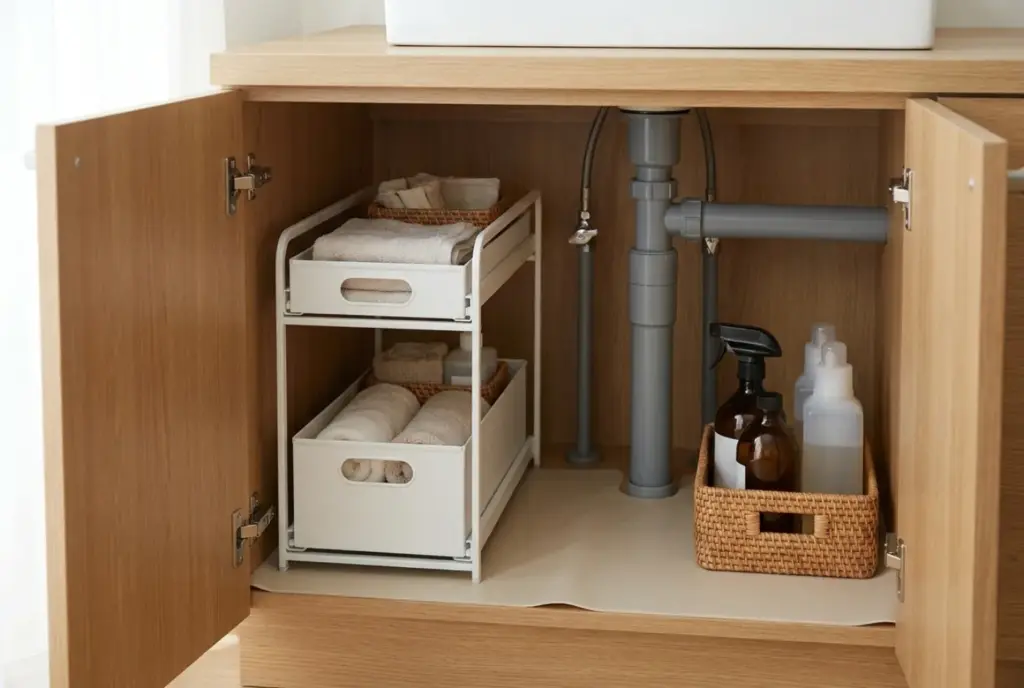
You organize under a bathroom sink by working around the pipes with narrow bins, a two tier sliding drawer, or a U shaped shelf, and by keeping the space for items you use weekly. The under sink cabinet is the hardest bathroom storage to use well because the plumbing splits the space.
- Measure the width on each side of the pipes before buying anything.
- Use a U shaped or adjustable under sink shelf to add a second level.
- Put cleaning supplies in a caddy you can carry out.
- Line the cabinet floor with a washable, waterproof mat.
- Keep hair tools in an open bin so cords do not tangle.
- Leave the area around the shutoff valves clear.
Kitchen sinks work much the same way; the turntables and risers in our guide to organizing kitchen cabinets fit under a vanity too. Choosing the right organizer type makes every cabinet in the bathroom easier to keep up.
What are the best organizers for bathroom cabinets?
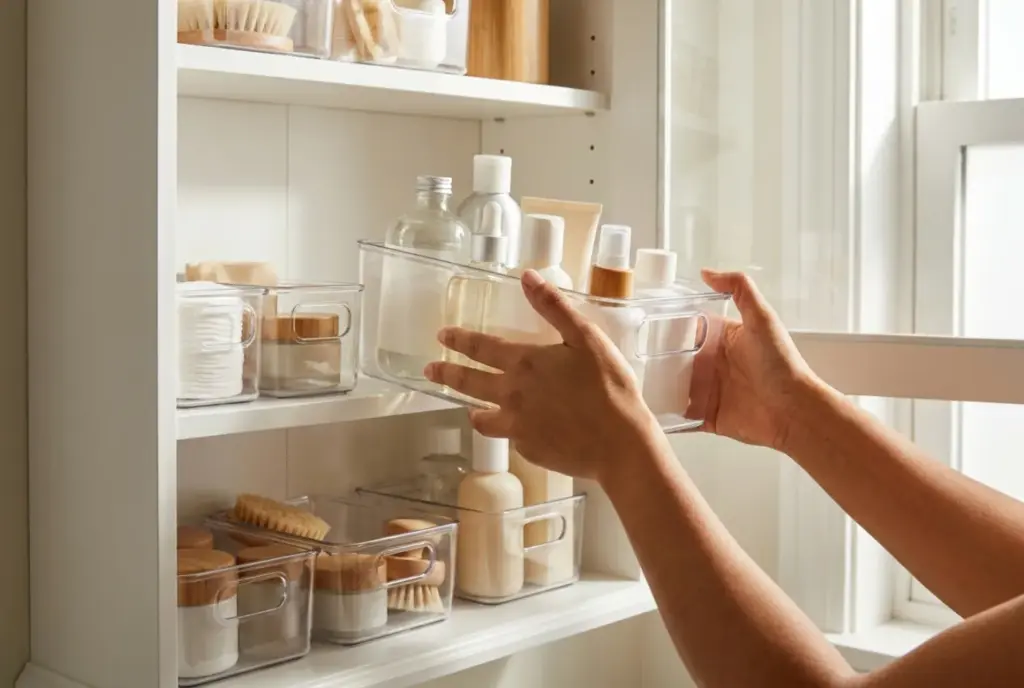
The best organizers for bathroom cabinets are shelf risers, turntables, clear bins, drawer dividers, and pull-out drawers, chosen to fit the exact shelf. Measure height, width, and depth before buying, because bathroom cabinets are often shallower than kitchen ones.
| Organizer type | Best for | Where it works |
|---|---|---|
| Shelf riser | Doubling shelf space for short bottles | Mirror cabinet, vanity shelf |
| Turntable | Lotions, sprays, and skincare | Deep corners, under sink |
| Clear bins | Grouping first aid, hair, or shaving supplies | Any shelf or closet |
| Drawer dividers | Makeup, toothbrushes, and small tools | Vanity drawers |
| Two tier sliding drawer | Reaching the back of a deep cabinet | Under the sink |
| Door hooks and baskets | Hair dryers, brushes, washcloths | Inside cabinet doors |
Turntables and clear bins do the same job in the pantry, as our guide to organizing a pantry shows. The products you clear out still need a safe way out of the house.
How do you get rid of expired medicine and bathroom products?
Get rid of expired medicine at a drug take-back location or with a mail-back envelope, and take leftover chemical products to a household hazardous waste collection. Most cosmetics and empty plastic bottles can go in the trash or recycling.
- Medicine: the FDA lists drug take-back sites and mail-back programs as the preferred options, with trash disposal steps for when neither is available.
- Nail polish, remover, and aerosols: many communities treat these as household hazardous waste, so check your county’s collection days.
- Razors and blades: wrap them or use a blade bank before putting them in the trash.
- Empty bottles: rinse and recycle where your hauler accepts them.
Many pharmacies, hospitals, and police stations host take-back drop boxes year round. Clearing old products out once or twice a year keeps the cabinets from refilling.
How does a professional organizer approach bathroom storage?
A professional organizer approaches bathroom storage by editing products, measuring every cabinet, and setting up zones for each person who shares the room. At Just Right Organizing, bathrooms are often part of a whole home session in Glen Carbon, Edwardsville, Troy, and across the Metro East.
- Editing: expired and unused products are sorted out with you, not for you.
- Measured product picks: Kalli researches risers, bins, and drawers that fit your cabinets and sends shopping links, and you buy only what fits.
- Shared bathroom zones: each person gets a shelf or bin.
- Donation haul-away: unopened products and extra items leave with the team.
Our home organizing services cover bathrooms, kitchens, and closets, and our frequently asked questions page explains how sessions work. A bathroom cabinet that shows you everything at a glance saves time every single morning.
Frequently asked questions
How often should you clean out bathroom cabinets?
Clean out bathroom cabinets every six months, and check eye makeup and sunscreen more often. A twice a year check catches expired products before they pile up in the back.
Where should you store medicine if not in the bathroom?
Store medicine in a cool, dry place such as a dresser drawer, closet shelf, or kitchen cabinet away from the stove and sink. The FDA notes that a damp bathroom cabinet can reduce a medicine's effectiveness, and any spot you choose should be out of children's reach.
How do you organize a bathroom with no cabinet space?
Organize a bathroom with no cabinet space by adding storage above the toilet, on the back of the door, and on the walls with shelves or hooks. A small rolling cart and moving backstock to a hall closet free up the counter.
How do you organize a shared bathroom?
Organize a shared bathroom by giving each person one bin, drawer, or shelf for their own products and keeping shared items like toothpaste and toilet paper in a common zone. Color coded bins make it clear whose items are whose without labels.
Want bathroom cabinets that stay organized?
Just Right Organizing can sort your bathroom with you, recommend storage that fits your exact cabinets, and take donations away the same day. Request a free organizing consultation and Kalli will call to talk through your home.
Articles are researched and drafted with AI-assisted tools, illustrated with AI-generated images, and reviewed by Kalli Erwin before publishing.