
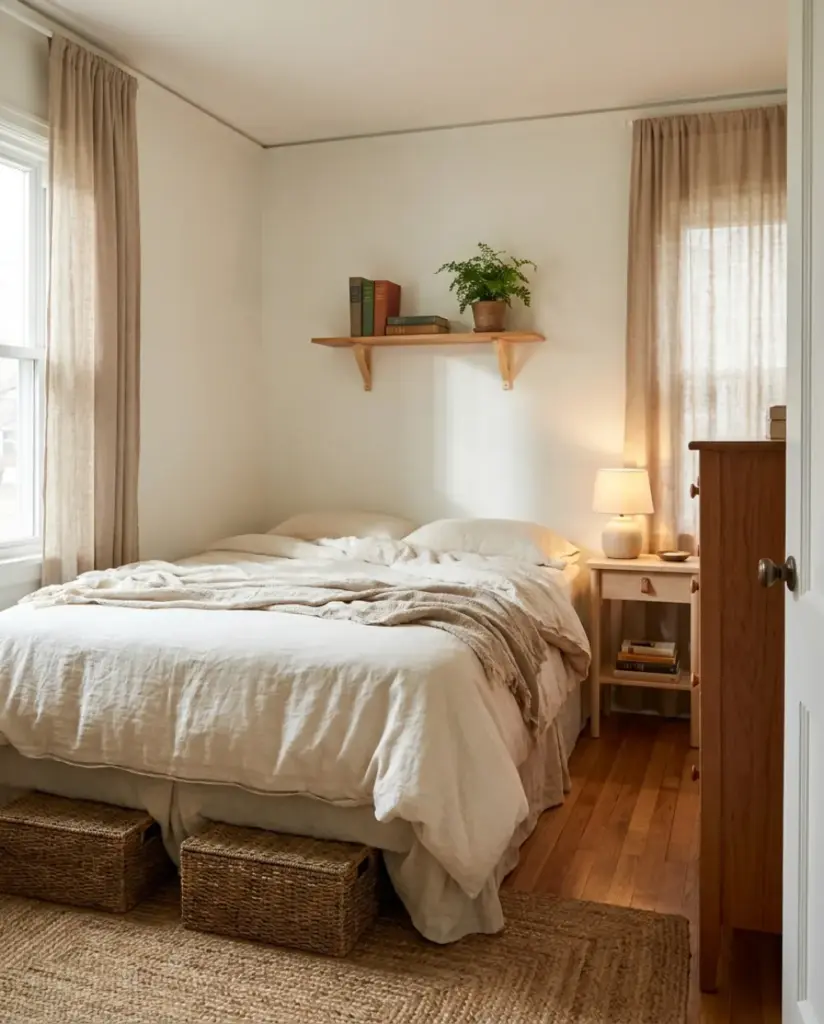
How to organize a small bedroom in 8 steps
Organizing a small bedroom comes down to fewer things, a smart layout, and storage that uses height and hidden space, in that order. Most small bedrooms take one or two sessions of three to four hours, and the order below keeps you from buying storage you do not need.
1. Pare down what lives in the room
Take out anything that does not belong in a bedroom: paperwork, exercise gear, gift wrap, and items waiting to be returned. Go through clothes, books, and nightstand drawers next to that pile, keeping only what you use in this room. Our guide to clearing out clothes one category at a time covers the closet and dresser in detail.
2. Measure and choose a layout
Measure the room, the bed, and each piece of furniture. Aim for at least two feet of walking space along the sides of the bed and in front of the dresser. Place the bed on the wall that leaves the longest open path from the door. Sketch two or three layouts on paper before moving heavy furniture, and check that every drawer and door can open fully.
3. Go vertical
Tall, narrow furniture and wall shelves hold more while using less floor. A tall dresser, a shelf above the desk or bed, and hooks behind the door all add storage without crowding the room. Anchor tall dressers and bookcases to the wall; the American Academy of Pediatrics notes that a child is treated in an emergency department at least once every hour for injuries from a furniture or TV tip-over.
4. Use the space under the bed
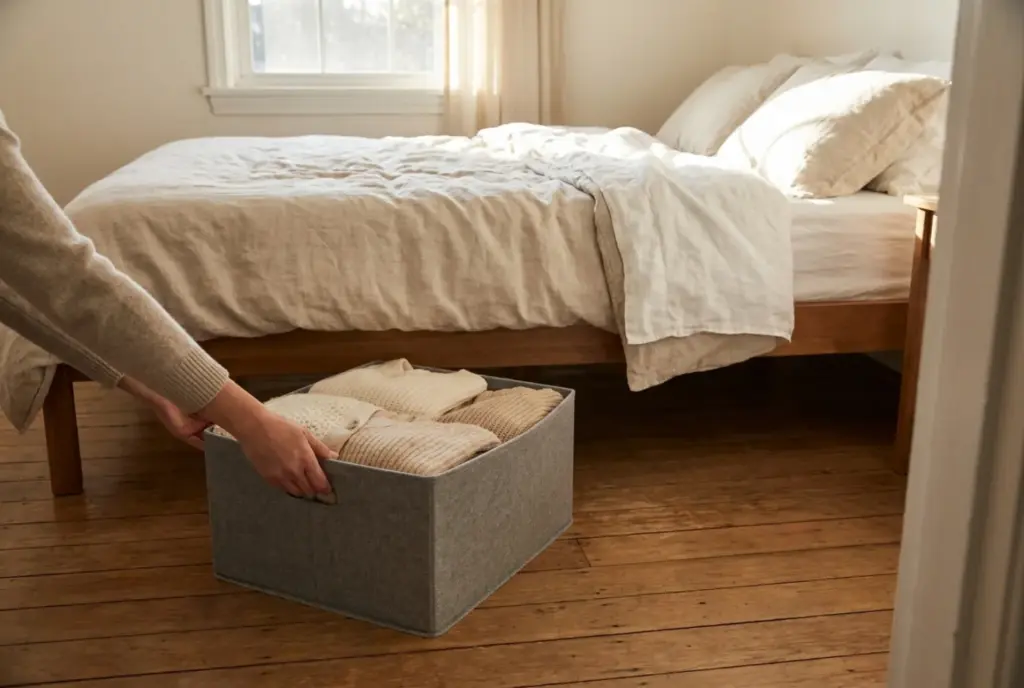
Under the bed is the biggest hidden storage spot in a small bedroom. Use low, lidded bins or rolling drawers for off season clothes, spare bedding, and shoes. Bed risers or a platform bed with drawers add even more room.
5. Double the closet rod
Add a second hanging rod below the first for shirts and folded pants. Use the top shelf for bins of seasonal items and the floor for shoes. Slim, matching hangers fit noticeably more on the same rod.
6. Use the back of the door
An over the door rack or pocket organizer holds shoes, scarves, belts, and bags. It turns an unused surface into storage for the small items that tend to land on the dresser.
7. Clear the surfaces
Keep the nightstand to a lamp, a book, and a charger. Use a small tray on the dresser for jewelry and keys. Clear surfaces make a small bedroom look larger, and they make dusting a one minute job instead of a project.
8. Give everything a home
Every item that stays should have one spot. A small basket for the things that collect at the end of the day keeps them off the floor and the bed, and that home for every item is what a small bedroom needs most.
What are the must-haves for a small bedroom?
The must-haves for a small bedroom are a bed with storage underneath, one tall dresser or wardrobe, a small nightstand, good lighting, and wall or door storage. These six pieces cover most of what a small bedroom needs without crowding it.
- Storage bed or risers: drawers or bins underneath.
- Tall dresser: more drawers in the same footprint, anchored to the wall.
- Narrow nightstand: or a wall mounted shelf beside the bed.
- Wall or plug in sconces: to free up nightstand space.
- Over the door organizer: for shoes and accessories.
- A mirror: to reflect light and make the room feel larger.
Shoes are often the first thing to crowd a small bedroom floor, and our list of shoe storage ideas has options for under the bed and behind the door. Some small bedrooms are missing an even bigger piece: the closet.
How do you organize a small bedroom without a closet?
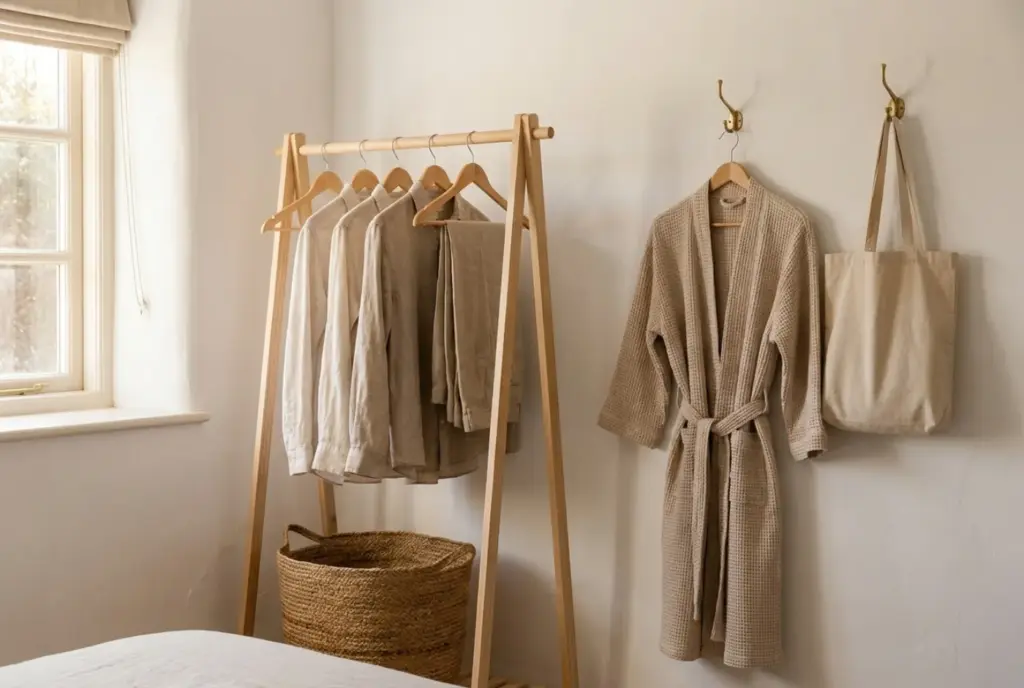
You organize a small bedroom without a closet by creating hanging and folded storage out in the room: a clothing rack or wardrobe, a dresser, and wall hooks. Bedrooms in many older houses have small closets or none at all, so a closet free setup is a common need.
- A freestanding wardrobe or armoire for hanging clothes.
- A clothing rack with a shelf, kept to a set number of hangers.
- A curtain across an alcove to create a closet look.
- A row of wall hooks for robes, bags, and tomorrow’s outfit.
- Under bed drawers for folded clothes and off season items.
- A bench or trunk at the foot of the bed for extra blankets.
An open rack works only when it holds just what you wear, which is why the editing step matters more without a closet. Our guide to organizing a closet covers hanger and bin choices that work on a rack too. Where those pieces go in the room comes down to layout.
How should you arrange furniture in a small bedroom?
Arrange furniture in a small bedroom by placing the bed first, against the longest wall or centered on the wall opposite the door, and fitting the other pieces around clear walkways. The bed is the largest piece, so its spot decides everything else.
- Keep at least two feet of walking space where you can.
- Push a full or twin bed into a corner to open the floor.
- Keep the dresser out of the door’s swing.
- Choose leggy furniture so more floor shows.
- Skip a second nightstand if space is tight.
- Hang curtains high and wide to make the window feel larger.
Kids’ rooms follow the same layout rules, with toys added to the mix; our guide to organizing toys and a playroom covers bins and rotation. Once the layout works, a few habits keep it that way.
How do you keep a small bedroom organized?
You keep a small bedroom organized with a five minute reset every night and a quick edit each season. Small rooms show disorder faster, so short daily habits matter more than a big weekend cleanup.
- Make the bed every morning.
- Put clothes away or in the hamper before bed.
- Clear the nightstand of cups and wrappers nightly.
- Keep a donation bag in the closet or under the bed.
- Swap seasonal clothes in and out twice a year.
- Return borrowed dishes, laundry baskets, and stray items to their rooms each weekend.
A tidy bedroom also supports better rest. The National Heart, Lung, and Blood Institute recommends that you keep your bedroom quiet, cool, and dark as part of healthy sleep habits, and a room without piles and extra furniture makes that easier. When the reset still feels like too much, it often means the room needs a full setup rather than more effort.
How can a professional organizer help with a small bedroom?
A professional organizer helps with a small bedroom by editing what is in the room, planning a layout that fits, and recommending storage sized to your space. Just Right Organizing works with families across the Metro East, including O’Fallon, Troy, and Alton, on bedrooms, closets, and kids’ rooms.
- Editing support: guided keep or let go decisions, room by room.
- Layout and systems: zones for sleeping, dressing, and storage.
- Product research: Kalli sends shopping links for bins, risers, and organizers, and you buy only what fits.
- Donation haul-away: included in every session.
Our closet organizing service often extends into the bedroom, and you can see real organizing projects to get a sense of the work. A small bedroom that holds only what you use feels larger the moment you walk in.
Frequently asked questions
How do I make a small bedroom feel bigger?
Make a small bedroom feel bigger by clearing the floor and surfaces, using leggy furniture, adding a mirror, and hanging curtains high and wide. Fewer pieces of furniture, each with a clear job, open up the room more than any paint color.
Where do you put a dresser in a small bedroom?
Put a dresser in a small bedroom on a wall outside the door swing and the main walkway, often opposite or beside the foot of the bed. A tall, narrow dresser anchored to the wall gives the most drawer space for the least floor.
What should not be stored under the bed?
Do not store paperwork you need often, food, or anything heavy you will struggle to pull out from under the bed. Under bed space works best for off season clothes, spare bedding, and shoes in lidded bins.
Is a platform bed with drawers worth it in a small bedroom?
Yes, a platform bed with drawers is often worth it in a small bedroom because it replaces a dresser or adds storage in the same footprint. Check that the drawers can open fully with the bed in its planned spot before buying.
Want help making a small bedroom work?
Just Right Organizing can edit the room with you, plan a layout that fits, and take donations away the same day. Request a free organizing consultation to talk through your space with Kalli.
Articles are researched and drafted with AI-assisted tools, illustrated with AI-generated images, and reviewed by Kalli Erwin before publishing.