

What is on a downsizing checklist?
A downsizing checklist covers five phases: planning, sorting, furniture, rehoming items, and packing.
The 15 tasks below are the full downsizing checklist in order, and each one is explained in the sections that follow.
- Set a timeline six to twelve months out.
- Write down your goals and budget for the move.
- Get the floor plan and measurements of the new home.
- Start with storage areas and duplicates.
- Go room by room with keep, donate, sell, and toss.
- Save sentimental items for last.
- Measure furniture and map it onto the new floor plan.
- Offer heirlooms to family with a pickup deadline.
- Schedule donation pickups.
- Sell or consign higher value pieces.
- Recycle or safely dispose of what is left.
- Pack by room in the new home, not the old one.
- Change your address and transfer utilities.
- Pack an open first box.
- Set up the bedroom and bathroom first.
The planning tasks come first because every later decision depends on how much space the new home has.
How far ahead should you start downsizing?
Start downsizing six months to a year before your move date. The Family Caregiver Alliance’s downsizing checklist for caregivers says six months or a year ahead is not too early, and it suggests limiting sorting to about two hours a day for an older adult so the work stays manageable.
1. Set a timeline six to twelve months out
Count back from the move date and block one room per week or two. A longer runway lets you sell items at fair prices instead of giving everything away in a rush.
2. Write down your goals and budget
List why you are downsizing: less upkeep, lower costs, a single floor, or being near family. Note your moving budget and whether you will pay for help. Clear goals make every keep or let go decision easier.
3. Get the floor plan of the new home
Ask for a floor plan or measure each room, closet, and cabinet yourself. Note doors, windows, vents, and outlets. Knowing the exact closet and kitchen space tells you how much of each category can come, and that number guides where you start sorting.
What should you get rid of first when downsizing?
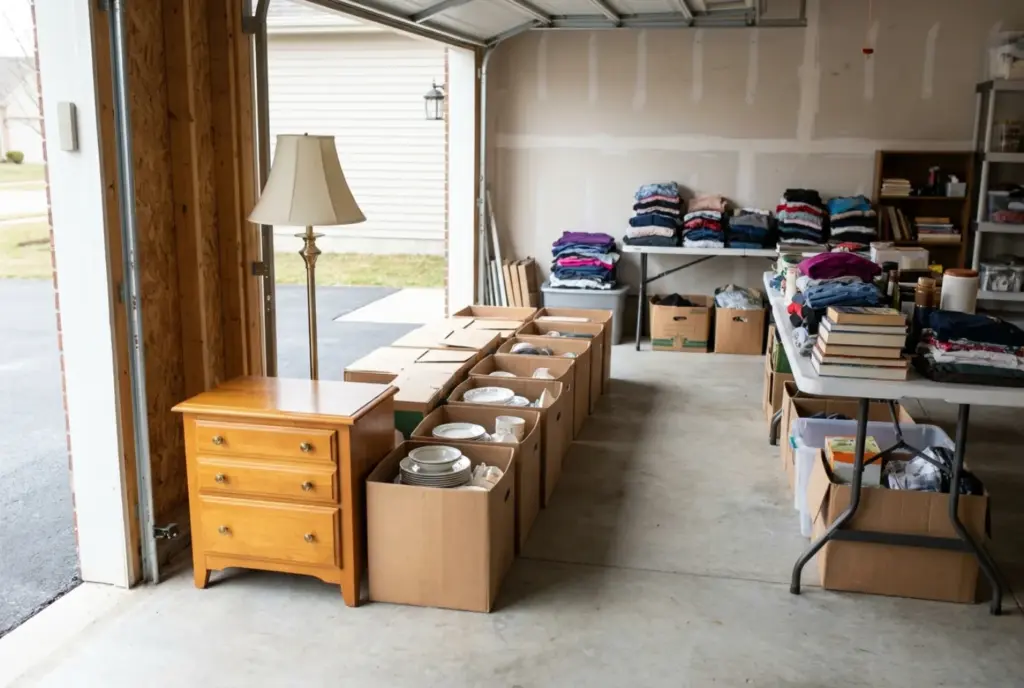
Get rid of duplicates and the contents of storage areas first when downsizing, because those are the things you use least. Downsizing the attic, basement, garage, and spare room first clears the most space with the fewest hard decisions, and it leaves the rooms you live in for later.
4. Start with storage areas and duplicates
Begin in the basement, garage, or attic, then move to duplicates in the kitchen and linen closet. Our guides to organizing a basement and organizing a garage help you sort those spaces into clear categories first.
5. Go room by room
Use four labeled bins or bags in every room: keep, donate, sell, and toss. Work one room at a time and finish it before starting the next.
| Room | Usually keep | Usually let go |
|---|---|---|
| Kitchen | Everyday dishes, favorite pans, one set of utensils | Duplicate gadgets, extra serving pieces, bulk appliances |
| Bedroom and closet | Clothes worn in the last year, one or two seasons of bedding | Clothes that do not fit, extra blankets and pillows |
| Living room | Seating and tables sized for the new room | Oversized sectionals, extra side tables, unused decor |
| Office | Legal, tax, and medical papers you must keep | Old files, extra cords, unread books |
| Garage | Basic tools and current hobby gear | Duplicate tools, old sports equipment, leftover chemicals |
For the closet, our guide to sorting your clothes one category at a time walks through the keep questions in detail.
6. Save sentimental items for last
Photos, letters, and family keepsakes take the most time and energy. Sorting them last means you have practice making decisions, and you will know how much space is left for them.
How do you decide what furniture to keep when downsizing?
Keep the downsizing furniture that fits the new floor plan, gets used daily, and matters to you, and let go of pieces sized for the old house. Measuring is the deciding factor, not guessing.
7. Measure furniture and map it
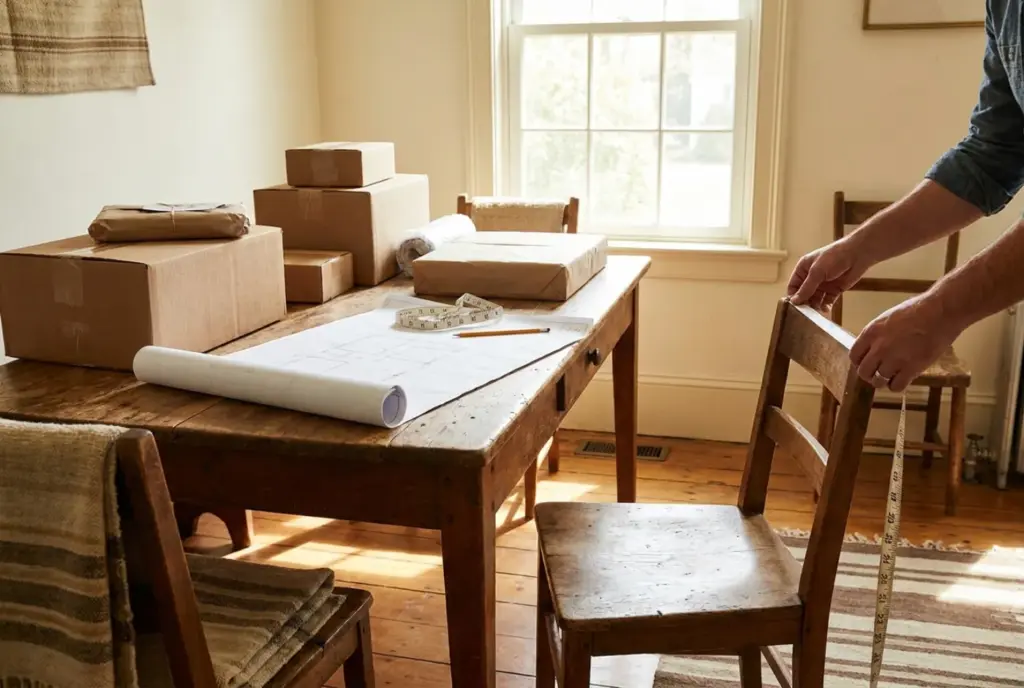
Measure your bed, sofa, dining table, and dressers, then draw them onto the new floor plan. If a piece blocks a walkway or a door, it does not come. Pieces that serve two purposes, like a storage ottoman, earn extra points.
8. Offer heirlooms to family with a deadline
Send family members photos of furniture and keepsakes and ask them to claim items by a set date. Anything unclaimed by the deadline moves to the donate or sell list, and that keeps the timeline intact.
Where should downsized items go?
Downsized items should go to family, donation, consignment or sale, and recycling, in that order, so the fewest downsized items end up in a landfill. Planning where downsized furniture and household items will go keeps the house from filling with boxes that have nowhere to go.
9. Schedule donation pickups
Book pickups a few weeks ahead. Habitat for Humanity ReStores accept new and gently used furniture and appliances, and many locations offer free pickup of large items.
If you plan to deduct donations, IRS Publication 526 requires clothing and household items to be in good used condition or better.
10. Sell or consign higher value pieces
Antiques, quality furniture, and collections may be worth selling through consignment, an estate sale, or an online listing. Price realistically and set an end date for anything that does not sell.
11. Recycle or dispose of what is left
Old paint, cleaners, and chemicals cannot go in the trash. Check your county’s household hazardous waste collection, shred old papers, and recycle electronics through a certified drop off.
What should you do in the last month before a downsizing move?
In the last month before a downsizing move, pack by destination room, update your address, and set aside essentials so the first night in the new home is easy. Our packing checklist for moving covers supplies and box order in detail.
12. Pack by room in the new home
Label every box with the room it goes to in the new home, not the room it came from. Movers and family helpers can then place boxes without asking.
13. Change your address and utilities
Submit a change of address with the post office early. USPS says to allow at least 7 to 10 business days for mail forwarding to take effect. Schedule utility transfers, and notify your bank, doctors, and insurance.
14. Pack an open first box
Fill one box with medications, chargers, toiletries, a change of clothes, sheets, and basic kitchen items. Keep it with you, not on the truck.
15. Set up the bedroom and bathroom first
A made bed and a working bathroom make the first night comfortable. Our guide to unpacking after a move covers the rest of the setup, room by room.
What should you not do when downsizing?
The biggest downsizing mistake is waiting until the last month to start sorting. These other mistakes cost time, money, and energy:
- Moving things you have not used in years just to sort them later.
- Buying storage bins before you know what is coming.
- Starting with photos and keepsakes.
- Letting adult children leave their belongings behind indefinitely.
- Expecting high resale prices for common furniture.
- Making every decision alone when family or a professional could help.
Why does this downsizing checklist follow this order?
This downsizing checklist follows the order of decisions, from space to sorting to furniture to rehoming to packing, because each task depends on the one before it. Measuring the new home sets the limits, sorting storage areas early clears the most volume with the least emotion, and sentimental items wait until decision making is easier. The order reflects how professional organizers, family caregivers, and moving guides commonly sequence a move to a smaller home.
How does a professional organizer help with downsizing?
A professional organizer helps with downsizing by planning the timeline, guiding sorting decisions, and packing and unpacking the home so the new space works on day one. Just Right Organizing’s downsizing sessions serve families across the Metro East, including Edwardsville, Alton, and Troy.
- Planning: a room by room schedule built around the move date.
- Sorting support: steady, judgment free help with keep or let go decisions.
- Donation haul-away: included with every session, so items leave as you go.
- Packing and setup: our packing services and unpacking and home setup get the new home working fast.
Just Right Organizing does not provide cleanouts, junk removal, or moving trucks, and it pairs well with a mover you hire for transport. Learn more about the team on our Meet Kalli page, and see the full list of home organizing services.
Frequently asked questions
At what age do most people downsize?
There is no set age to downsize; most moves follow a life change such as retirement, an empty nest, a health change, or the loss of a spouse. Starting the sorting process before that change arrives gives you more choices and less pressure.
How long does it take to downsize a house?
Downsizing a house usually takes six months to a year when you sort steadily, room by room, ahead of the move. The Family Caregiver Alliance recommends starting six months or a year in advance, especially when an older adult is involved.
What is the hardest part of downsizing?
Sentimental items are the hardest part of downsizing because each decision carries memories. Sorting them last, after easier rooms are done, and offering keepsakes to family by a deadline makes those choices more manageable.
Should I sell or donate furniture when downsizing?
Sell furniture that has real resale value, such as antiques or quality solid wood pieces, and donate the rest. Donation is faster, and Habitat for Humanity ReStores accept gently used furniture with free pickup of large items at many locations.
Is there a printable downsizing checklist?
Yes, the 15 task list at the top of this guide works as a printable downsizing checklist. The Family Caregiver Alliance also publishes a detailed downsizing checklist for caregivers that families can print and fill in.
Planning a move to a smaller home?
Just Right Organizing can build your downsizing timeline, work through each room with you, and take donations away after every session. Request a free organizing consultation and Kalli will call to talk through your move.
Articles are researched and drafted with AI-assisted tools, illustrated with AI-generated images, and reviewed by Kalli Erwin before publishing.