
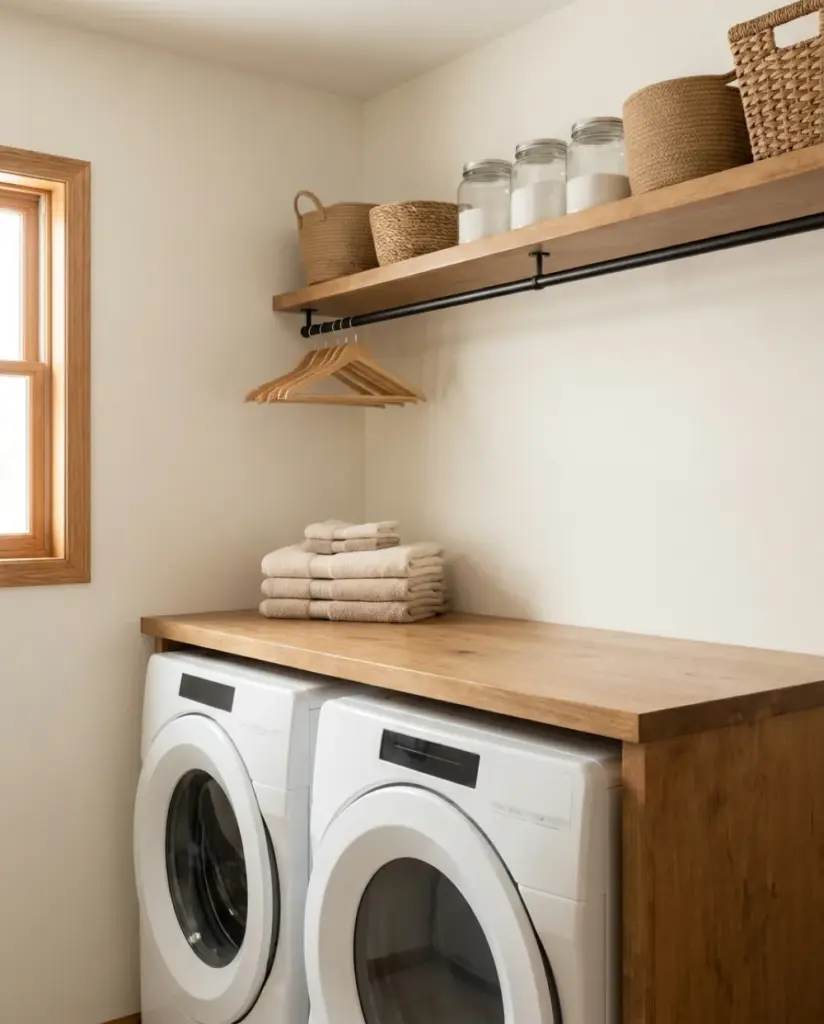
How to organize a laundry room in 7 steps
Organizing a laundry room comes down to clearing the space, grouping supplies by task, and storing them where each task happens. Most laundry rooms take one afternoon of two to four hours, plus a short shopping list once you see what you need.
1. Empty and clean the room
Take everything off the shelves, out of the cabinets, and off the top of the machines. Wipe the shelves, pull the washer and dryer forward if you can, and vacuum the lint and lost socks behind them. A clean, empty room shows you how much space you really have. Measure the wall above the machines and the gaps beside them before you buy anything.
2. Keep only what belongs
Sort what came out into laundry supplies, cleaning supplies, and things that drifted in from other rooms. Return the strays to their homes, recycle empty bottles, and combine half used containers of the same product.
3. Set up four laundry zones
A laundry room works best when it follows the order of a load:
- Sort: hampers or a divided sorter near the door.
- Wash: detergent, stain remover, and boosters within reach of the washer.
- Dry: dryer sheets or dryer balls, a lint brush, and a hanging rod by the dryer.
- Fold: a clear counter or the tops of front loading machines.
4. Use the walls above the machines
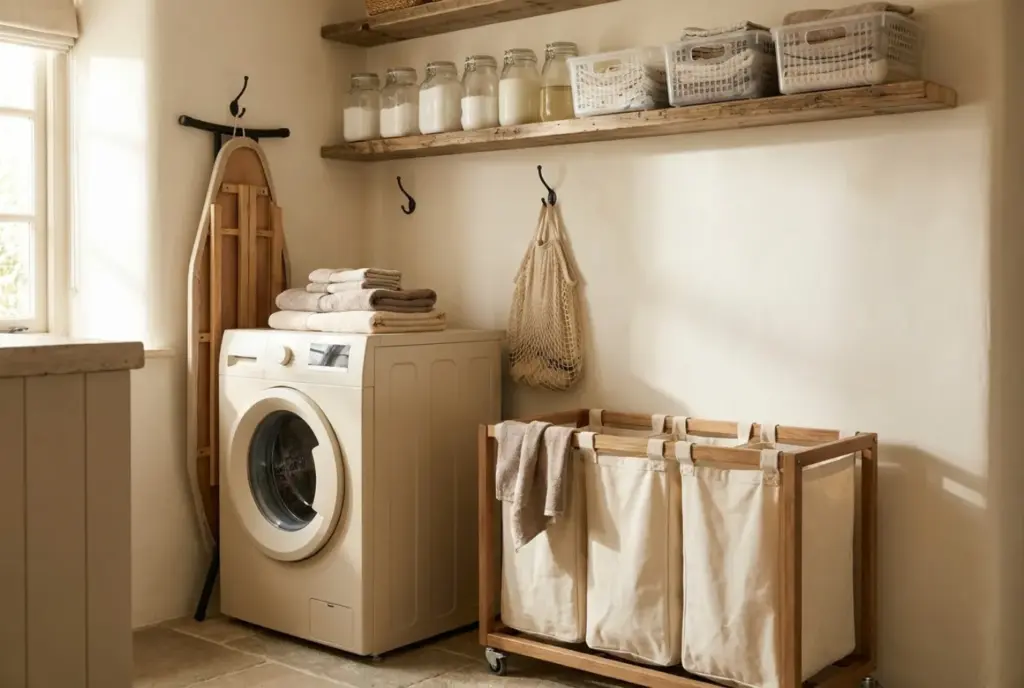
Wall space is the biggest untapped storage in most laundry rooms. Add a shelf or cabinet above the washer and dryer, a rod for drip drying, and hooks for the ironing board, broom, and mesh bags. Keep heavy jugs on the lowest shelf so lifting them is safe.
5. Store supplies by frequency and safety
Put the products you use every load at eye level and backstock up high. Keep detergent pods closed, in their original container, and out of reach. America’s Poison Centers reports that poison centers managed 1,423 laundry detergent packet exposures in children 5 and younger in just the first two months of 2024.
6. Add a sorting system
A two or three bag sorter for lights, darks, and delicates saves a sorting step on laundry day. Families with older kids often give each person a hamper so clean clothes go back to the right room. A basket per bedroom, carried down full and back up folded, ends the pile of unclaimed clothes on the dryer.
7. Fill the gaps
Slide a narrow rolling cart into the gap beside the machines for stain sprays and brushes. Use clear bins on shelves so you can see when a product is running low, which matters most once you decide what the room should hold.
What should be stored in a laundry room?
A laundry room should store only the things you use to wash, dry, treat, and fold clothes, plus a small set of related tools. Keeping the list short is what keeps the shelves clear.
- Detergent, stain remover, bleach, and fabric softener.
- Dryer sheets or dryer balls and a lint brush.
- Hampers, a sorter, and a laundry basket for each floor.
- Drying rack, hangers, and mesh bags for delicates.
- Iron, ironing board, or a steamer.
- A small sewing kit and a jar for pocket finds.
Spare sheets and towels usually belong in a linen closet instead; our guide to organizing a linen closet shows how to set one up. What stays out of the laundry room matters as much as what goes in.
What should not be stored in a laundry room?
Paper goods, extra linens, food, and anything flammable should not be stored in a laundry room, because laundry room heat, lint, and humidity damage them or create a hazard. Washers and dryers add moisture to the air, and the EPA recommends keeping indoor humidity below 60 percent, ideally between 30 and 50 percent, to prevent mold.
- Paper and cardboard: boxes and paper towels stored in a laundry room soak up moisture and invite mold.
- Clean linens: stored towels pick up a musty smell near a working washer.
- Food and pet food: laundry room warmth and humidity shorten shelf life.
- Paint, solvents, and aerosols: keep them away from the heat of the dryer.
- Anything piled near the dryer: clothes, rags, and baskets block airflow.
Lint is the hidden fire risk. The U.S. Fire Administration notes that failure to clean was the leading factor in home clothes dryer fires, at 31 percent from 2018 to 2020. A clean lint trap and a clear zone around the dryer protect a small room most of all.
How do you organize a small laundry room or laundry closet?
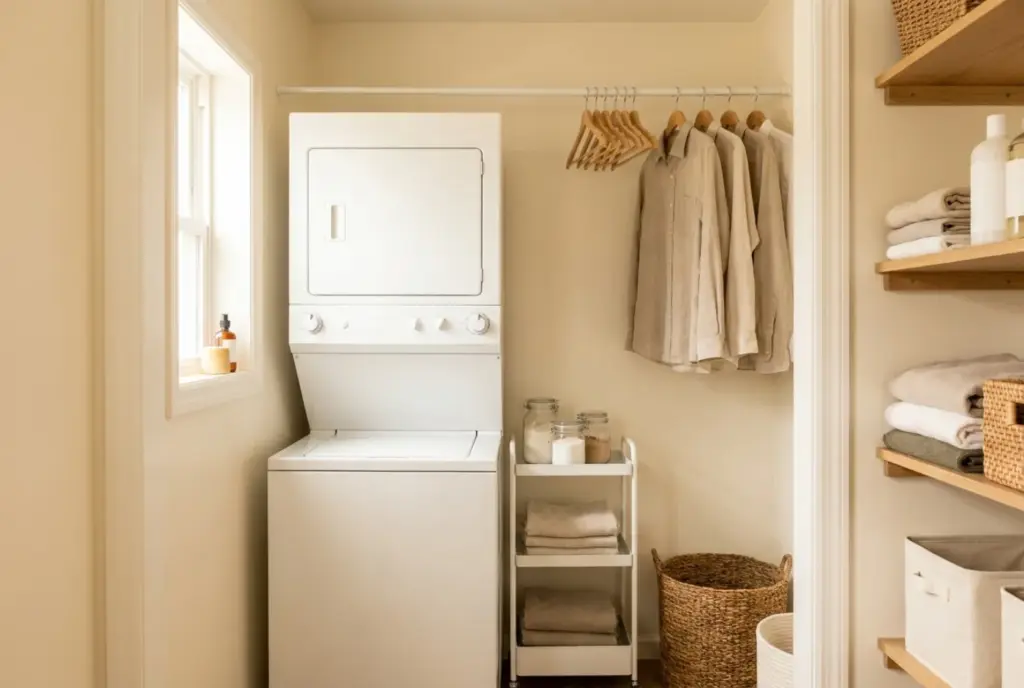
You organize a small laundry room or laundry closet by building up, using doors and gaps, and cutting supplies down to what one week of laundry needs. Stacked machines, narrow carts, and wall rails do the work that cabinets do in a larger room.
- Stack a front loading washer and dryer if the models allow it.
- Add a tension rod or a shelf above the machines.
- Hang an over the door rack for sprays and brushes.
- Use a fold down drying rack mounted to the wall.
- Keep one bottle of each product out and backstock elsewhere.
- Choose a slim rolling cart for the gap beside the machines.
Many Metro East homes have laundry in the basement or garage, and the same rules apply there: mark off the laundry area, give it its own shelf, and keep holiday bins and tools out of it. Our guides to organizing a basement and organizing a garage cover how to keep a shared utility space from swallowing the laundry area. A small space stays usable only with a few steady habits.
How do you keep a laundry room organized?
You keep a laundry room organized by resetting it after every load and doing a quick monthly check. Five minutes of reset beats an afternoon of cleanup later.
- Clean the lint trap after every dryer load.
- Fold or hang clothes as soon as the dryer stops.
- Return baskets to bedrooms the same day.
- Empty the pocket jar and the lost sock bin once a week.
- Check backstock monthly and write down what is low.
- Wipe spills on shelves before they get sticky.
A household that sorts clothes by person makes this easier, and pulling outgrown or unworn pieces as they come through the wash keeps drawers from overflowing; our guide to clearing out the clothes you no longer wear walks through that process. Some families prefer to have the whole room set up for them once and simply maintain it.
How does a professional organizer set up a laundry room?
A professional organizer sets up a laundry room by mapping how your family does laundry, editing supplies, and building zones and storage around that routine. At Just Right Organizing, the laundry room is often part of a larger project that includes the linen closet, mudroom, or basement in a home in Alton or anywhere across the Metro East.
- Workflow first: zones follow the order of a real load in your home.
- Product research: Kalli recommends shelves, carts, and bins and sends shopping links, and you buy only what the space needs.
- Donation haul-away: unused items leave with the team at the end of the session.
- Room by room: laundry, linen, and entry spaces are set up to work together.
Our home organizing services cover the laundry room as part of whole home sessions, and the entryway nearby often gets the same treatment. A laundry room that matches your routine turns a chore into a short, predictable task.
Frequently asked questions
What is the best layout for a laundry room?
The best laundry room layout follows the order of a load: sorting near the door, washing supplies by the washer, drying tools by the dryer, and a folding surface beside or on top of the machines. This order keeps you from crossing the room with wet clothes.
Where should I put laundry detergent in a small laundry room?
Put everyday laundry detergent on a shelf just above or beside the washer and keep backstock elsewhere. Detergent pods should stay closed in their original container and out of reach of children.
How often should you clean the dryer lint trap?
Clean the dryer lint trap after every load. The U.S. Fire Administration lists failure to clean as the leading factor in home clothes dryer fires, at 31 percent from 2018 to 2020.
Can you store towels in the laundry room?
You can keep the towels currently in rotation in a laundry room, but long term towel storage belongs in a linen closet. Humidity from the washer and dryer can leave stored towels smelling musty.
Ready for a laundry room that works?
If your laundry room has become the drop zone for the whole house, Just Right Organizing can sort it, set up zones that fit your routine, and take the donations with us. Request a free organizing consultation to talk through your space with Kalli.
Articles are researched and drafted with AI-assisted tools, illustrated with AI-generated images, and reviewed by Kalli Erwin before publishing.