
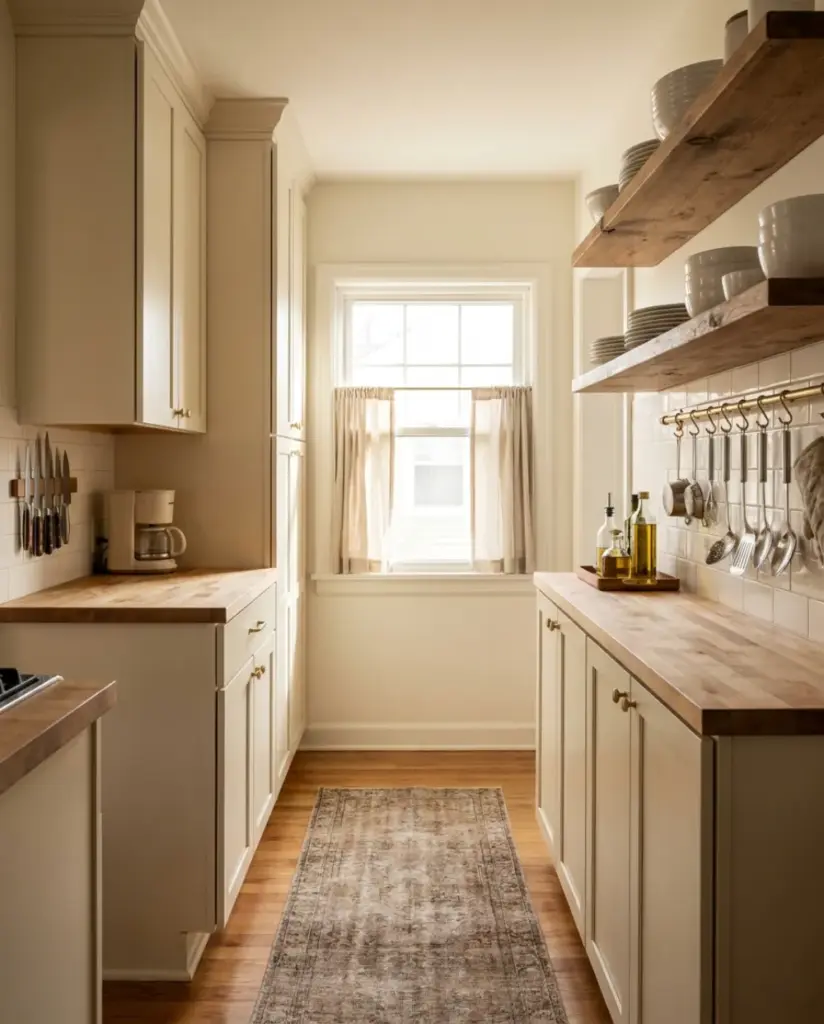
How to organize a small kitchen in 8 steps
To organize a small kitchen, pare down what you own, divide the room into work zones, clear the counters, and use walls, doors, and cabinet height for storage. Every item should live within reach of where it gets used. These eight steps work in galley kitchens, apartment kitchens, and older Midwest homes with few cabinets.
- Pare down duplicates and unused tools.
- Map the kitchen into work zones.
- Clear the counters.
- Use vertical wall space.
- Add shelf risers and turntables inside cabinets.
- Store pans, lids, and sheet pans upright.
- Use doors, gaps, and the space under shelves.
- Contain the pantry and the fridge.
1. Pare Down Duplicates and Unused Tools
Paring down duplicates and unused tools frees more space in a small kitchen than any organizer can. Pull everything from one kitchen cabinet at a time, and keep only the tools, dishes, and gadgets you actually use.
- Extra mugs, water bottles, and travel cups.
- Single-use gadgets you have not touched in a year.
- Food storage containers without matching lids.
- Duplicate spatulas, peelers, and measuring cups.
Usable housewares can go to Habitat for Humanity ReStores, which resell reusable household items to fund local home building.
2. Map the Kitchen Into Work Zones
Mapping a small kitchen into work zones puts each tool beside the task it serves, so you take fewer steps. Most small kitchens need four zones.
- Prep: knives, cutting boards, and mixing bowls near the open counter.
- Cooking: pans, oils, spices, and utensils beside the stove.
- Cleanup: soap, towels, and trash near the sink.
- Coffee: mugs, filters, and the coffee maker together.
Keep the counter beside the range free of paper and towels. The U.S. Fire Administration reports that cooking is the leading cause of home fires and home fire injuries.
3. Clear the Counters
Clearing the counters in a small kitchen gives you back your prep space. Keep only what you use every day on the kitchen counter and store the rest in cabinets or on the wall.
- Leave out the coffee maker if you use it daily.
- Store the stand mixer and air fryer if they come out weekly or less.
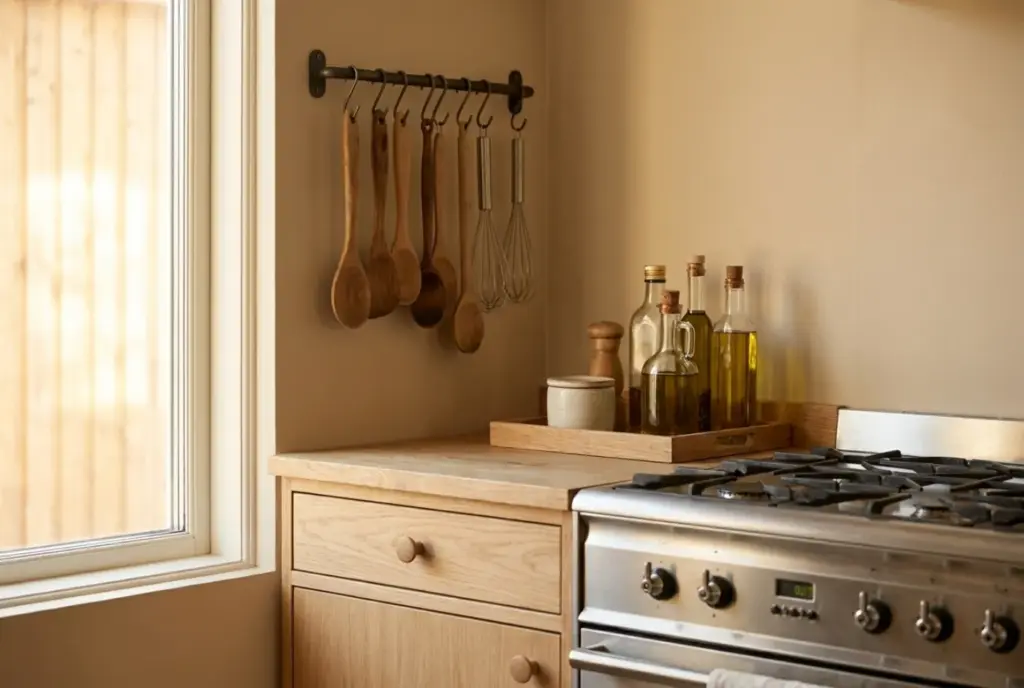
- Corral oils and salt on a small tray by the stove.
4. Use Vertical Wall Space
Vertical wall space is the biggest untapped storage in a small kitchen. Walls, backsplashes, and the sides of cabinets can hold tools that would crowd a drawer.
- A magnetic knife strip frees a drawer and the counter.
- A wall rail with hooks holds utensils, mugs, or towels.
- A pegboard holds pans and lids in a pantry corner.
- Floating shelves hold everyday dishes within reach.
5. Add Shelf Risers and Turntables Inside Cabinets
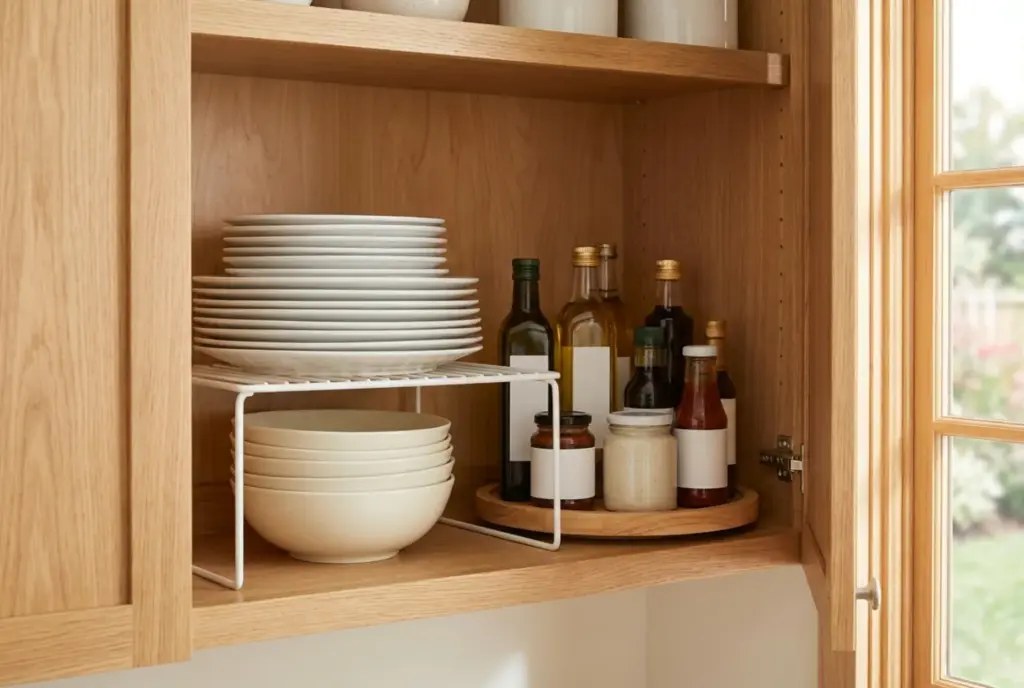
Shelf risers and turntables double usable cabinet space by adding a second level and bringing the back of the shelf forward. Risers split tall cabinets into two layers for plates and bowls. Turntables work in corner cabinets for oils and sauces.
- Measure shelf height before buying risers.
- Use a two-tier turntable under the sink for cleaners.
- Keep everyday plates on the lower level for easy reach.
Our guide on organizing kitchen cabinets and drawers covers drawer dividers and cabinet layouts in detail.
6. Store Pans, Lids, and Sheet Pans Upright
Storing pans, lids, and sheet pans upright in a vertical rack lets you pull one out without unstacking the pile. A small kitchen gains a whole shelf this way.
- Use a file-style divider for baking sheets and cutting boards.
- Store lids in a door-mounted rack.
- Nest pots by size and keep only the ones you cook with.
7. Use Doors, Gaps, and the Space Under Shelves
Cabinet doors, narrow gaps, and the space under shelves are bonus storage most small kitchens ignore. These spots hold small items that would otherwise fill a counter.
- An over-the-door rack inside a pantry or broom closet.
- Under-shelf baskets for wraps, foil, and napkins.
- A slim rolling cart in the gap beside the fridge.
- Adhesive hooks inside cabinet doors for measuring spoons.
8. Contain the Pantry and the Fridge
Containing the pantry and the fridge in a small kitchen with clear bins and labels keeps food visible, so you buy less of what you already own. The EPA suggests storing grains in airtight containers labeled with contents and dates.
- Group snacks, baking, and breakfast items in bins.
- Put older items in front of newer ones.
- Check canned goods for dents, swelling, or leaks.
Our step-by-step guides on pantry organization and how to organize a fridge go zone by zone.
How do you create more counter space in a small kitchen?
You create more counter space in a small kitchen by moving appliances off the counter, adding fold-down or rolling surfaces, and covering unused areas while you cook. Even one extra cutting-board-sized surface changes how a small kitchen feels.
- Use a cutting board that fits over the sink.
- Add a rolling cart or a wall-mounted fold-down shelf.
- Store small appliances in a lower cabinet near an outlet.
- Mount paper towels and spices on the wall or inside doors.
How do you organize a small kitchen on a budget?
You organize a small kitchen on a budget by paring down first and reusing containers you already own before buying anything. Sorting is free, and it often shows that you need fewer organizers than you thought. The same room-by-room sorting method works in every part of the house.
- Use shoeboxes or spare bins as drawer dividers.
- Reuse glass jars for dry goods with handwritten labels.
- Buy one organizer at a time, after measuring the space.
What is the best layout for a small kitchen?
The best layout for a small kitchen keeps the sink, stove, and fridge close together with clear counter space between them. Galley, L-shaped, and one-wall layouts all work when storage follows the workflow.
- Galley: prep and cleanup on one side, cooking on the other.
- L-shaped: use the corner for a turntable, not dead storage.
- One-wall: add a rolling cart or small island for prep.
What are common mistakes to avoid in a small kitchen?
The most common small kitchen mistakes are buying organizers before paring down, storing rarely used appliances on the counter, and ignoring vertical space. Each one costs space you already have.
- Keeping every gift and gadget out of guilt.
- Stacking pans so deep that the bottom ones never get used.
- Storing cleaning chemicals beside food.
How do you organize a small kitchen with no pantry?
You organize a small kitchen with no pantry by turning one cabinet, a shelf unit, or a rolling cart into a food zone. Keep food in one place, not scattered across every cupboard.
- Pick the cabinet closest to the prep counter.
- Add a slim shelf unit on an empty wall.
- Use stackable clear bins so cans and boxes stay visible.
How do professional organizers help with small kitchens?
Professional organizers help with small kitchens by sorting every cabinet, building zones around how you cook, and choosing storage that fits exact measurements. Our kitchen organizing services do this work beside you.
- We research products and send shopping links you buy yourself.
- Donation haul-away is included with each session.
- We label zones so the whole household can keep the system.
Our team serves kitchens across the Metro East, including Glen Carbon, IL, Troy, and Alton.
Frequently asked questions
How do I decide where to put things in my kitchen?
Decide where to put things in your kitchen by storing each item where you use it: pans by the stove, glasses by the sink or fridge, and knives near the prep counter. Daily items go between waist and eye level.
What should not be stored in kitchen cabinets?
Cleaning chemicals should not be stored in kitchen cabinets next to food, and food should not be stored above the stove or dishwasher, where heat builds up. Keep heavy items low and fragile items within safe reach.
What should you never leave on your kitchen counter?
Avoid leaving paper, dish towels, and appliances you rarely use on your kitchen counter. Small kitchens work best with only daily-use items out and a clear prep space.
Is a rolling cart good for a small kitchen?
Yes, a rolling cart is good for a small kitchen because it adds prep space and storage, then tucks into a gap when you are done. Choose one slim enough for the space beside the fridge or counter.
Want a small kitchen that works every day?
If your kitchen feels too small for the way your family cooks, our team can sort it, zone it, and set up storage that fits the space. Packages start at $850, and you can request a free organizing consultation by phone.
Articles are researched and drafted with AI-assisted tools, illustrated with AI-generated images, and reviewed by Kalli Erwin before publishing.