
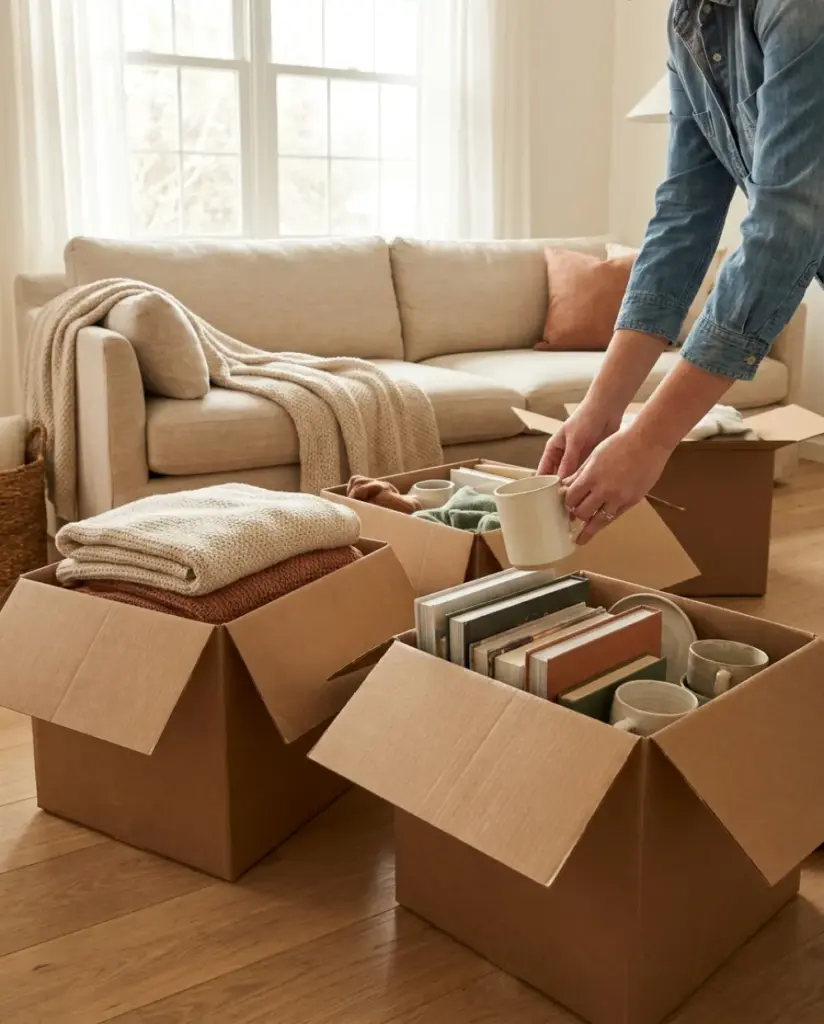
How to declutter your home, step by step
Clearing out a house follows eight steps, and the order matters: sort and remove first, organize second. Finish one room before you open the next.
- Set a goal and a time limit for each session.
- Start with one small, low-stakes space.
- Use the four-box method on every item.
- Sort by category, not only by room.
- Handle medicines, chemicals, and papers safely.
- Get donations out of the house the same week.
- Organize what remains with simple systems.
- Keep the result with a one-in, one-out habit.
1. Set a Goal and a Time Limit for Each Session
Setting a goal and a time limit for each session keeps a sorting session from stalling halfway. Name the space and the finish line before you start, such as “the hall closet floor is empty and swept.” A timer turns a big job into short, repeatable sessions.
- Pick one space per session.
- Set a timer for 30 to 60 minutes.
- Stop with time left to take trash and donations out.
2. Start With One Small, Low-Stakes Space
Starting with one small, low-stakes space, like a bathroom drawer, a coat closet, or the junk drawer, is the easiest way to begin. Quick wins build the decision-making muscle you need for harder rooms. Sentimental items, photos, and inherited pieces come last.
What should you remove first?
- Expired food, makeup, and toiletries.
- Broken items you have not repaired.
- Duplicates, such as a third can opener.
- Clothes and shoes that no longer fit.
3. Use the Four-Box Method to Sort Every Item
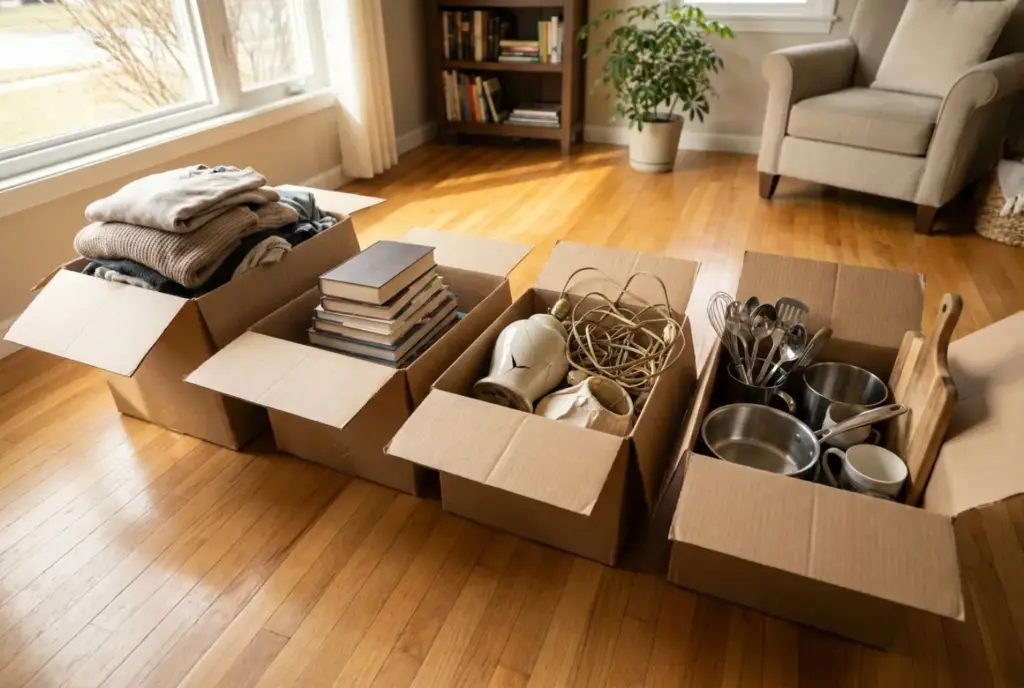
The four-box method sorts every item you touch into one of four boxes or bags: keep, donate, trash, or relocate. It forces a decision on each object instead of moving piles around.
- Keep: used, loved, and has a home.
- Donate or sell: useful, but not to you.
- Trash or recycle: broken, expired, or worn out.
- Relocate: belongs in another room.
Deliver the relocate box at the end of the session, not during it, so you stay in one space.
4. Sort by Category, Not Only by Room
Sorting by category, not only by room, means gathering every item of one kind, such as all coats or all shoes, from every room into one spot before deciding. Seeing the full count makes duplicates obvious. When every pair of sneakers sits in one pile, picking the best ones takes minutes. Sorting by category also shows which rooms quietly collect the same kinds of items.
- Good categories to gather: coats, shoes, towels, mugs, cords, and paper.
- Keep the gathering zone clear, like a bed or a folding table.
Shoes are a common category to gather, and our shoe storage ideas show where the keepers can live.
5. Handle Medicines, Chemicals, and Papers Safely
Handling medicines, chemicals, and papers safely means giving each one its own disposal plan, because none of them belong in the regular trash or the donation box.
Old medicines
The FDA says the best option for unused medicine is a drug take-back location or a prepaid mail-back envelope. Many pharmacies and police stations host take-back sites.
Paint, cleaners, and batteries
Leftover paint, cleaners, and pesticides count as household hazardous waste under EPA guidance. Check your county’s collection days before you toss them.
Paper records
The IRS generally has 3 years from your filing date to assess additional tax, so keep tax records at least that long. Shred old statements that hold account numbers.
6. Get Donations Out of the House the Same Week
Getting donations out of the house the same week matters, because a donation bag left by the door tends to get reopened. Put the donation bags straight into the car once the session ends, and plan the drop-off before you start sorting.
- Clothing and housewares go to local thrift stores.
- Furniture and building materials can go to Habitat for Humanity ReStores, which resell donated goods to fund home building.
- Call ahead for large items, since rules vary by store.
7. Organize What Remains With Simple Systems
Organizing what remains with simple systems comes after sorting, because bins bought too early end up storing things you no longer want. Once you know what stays, measure the space and pick storage to fit.
- Store items where you use them.
- Put daily items at waist to eye level.
- Use clear bins and labels so everyone knows where things go.
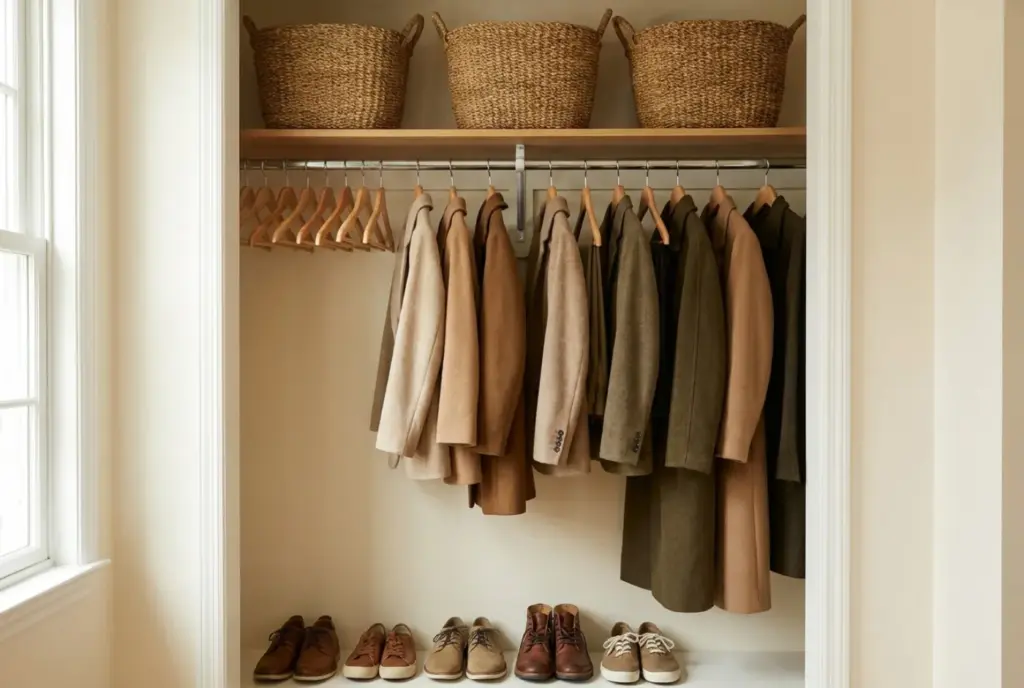
Our guides on how to organize a closet and how to set up kitchen drawers go deeper on room-by-room systems.
8. Keep the Result With a One-In, One-Out Habit
The one-in, one-out habit keeps the result by having one item leave whenever a new one comes home. It holds closets and cabinets at the level you set.
- Keep a donation bag in a closet at all times.
- Do a 10-minute reset at the end of each day.
- Repeat a full sort of each room once a year.
What should you keep when paring down your home?
When paring down your home, keep anything you use regularly, anything legally or financially important, and a limited set of sentimental items you truly treasure. When unsure about paperwork, keep it until you confirm the retention rules.
- Birth certificates, passports, deeds, and titles.
- Recent tax returns and their records.
- Warranties for items you still own.
- A curated box of photos and keepsakes.
What mistakes slow down sorting a whole house?
The mistakes that slow down sorting a whole house are starting with the hardest room, buying storage first, and leaving decision piles unfinished. Each one drains energy without freeing space.
- Pulling out a whole room in one day and running out of time.
- Keeping items “just in case” with no plan to use them.
- Letting donation bags sit in the garage for months.
What is the 20/20 rule for letting go of things?
The 20/20 rule for letting go of things says you can let go of an item if you could replace it for less than $20 in less than 20 minutes from home. The rule was popularized by The Minimalists, Joshua Fields Millburn and Ryan Nicodemus. It helps with “just in case” items like spare cables, extra kitchen tools, and duplicate supplies.
- Use it for cheap, easy-to-find items.
- Skip it for medicines, documents, and keepsakes.
- Use it when you catch yourself saying “I might need this someday.”
How do you sort sentimental items without regret?
You sort sentimental items without regret by saving them for last, keeping the best examples, and giving the rest a purpose. Decision skills built on easier rooms make these choices lighter.
- Choose a set container, such as one keepsake bin per person.
- Keep one or two pieces from a collection instead of all of it.
- Photograph items you love but do not need to keep.
- Offer family pieces to relatives before donating.
When does hands-on help make sense for a whole home?
Hands-on help makes sense when a whole home feels too big to start, when a move or downsizing has a deadline, or when progress keeps stalling. Our home organizing services pair sorting decisions with systems that fit how your family lives.
- We work beside you, so every keep or let-go choice stays yours.
- Donation haul-away is included with each session.
- We research storage and send shopping links you buy yourself.
Families across Alton, IL and the Metro East often read whether hiring a professional organizer is worth it before they call.
Frequently asked questions
What is the fastest way to sort out a whole room?
The fastest way to sort out a whole room is to work in zones, starting with the surfaces and floor, using four boxes for keep, donate, trash, and relocate. Set a timer and finish one zone before opening the next.
What room should you start with when organizing a house?
Start with a small, low-emotion room or space, such as a bathroom or coat closet. Early wins make decisions faster before you reach bedrooms, the garage, and keepsakes.
How do you start when you feel overwhelmed by your stuff?
When you feel overwhelmed by your stuff, start with one drawer or one shelf and a 15-minute timer. Finishing a tiny space gives you a visible result and a clear next step.
Should you buy storage bins before you start sorting?
No, buy storage bins after you sort, not before. Once you know what stays, you can measure the space and buy only the bins you need.
What should you do with things you are unsure about keeping?
Put things you are unsure about keeping in a dated maybe box and store it out of sight for a few months. If you never open the box, donate the things inside without reopening it.
Ready for help sorting your home?
If you want a plan and an extra set of hands, our team works room by room beside you and hauls donations away after each session. Packages start at $850, and you can request a free organizing consultation by phone to talk through your home.
Articles are researched and drafted with AI-assisted tools, illustrated with AI-generated images, and reviewed by Kalli Erwin before publishing.