
What are the best shoe storage ideas for every space?
The best shoe storage ideas put each pair of shoes where it is used: daily shoes by the door, dress shoes in the closet, and work boots in the garage. Matching shoe storage to the spot, the shoe type, and how often the pair gets worn keeps shoes organized. Here is the shortlist, each with the space it fits best.
- Shoe storage bench: best for entryways.
- Slim tip-out shoe cabinet: best for narrow hallways.
- Boot tray with wall hooks: best for wet and snowy months.
- Over-the-door shoe organizer: best for small closets.
- Stackable shoe racks: best for growing collections.
- Clear drop-front shoe boxes: best for special-occasion pairs.
- Closet shelves with risers: best for heels and flats.
- Under-bed shoe storage: best for off-season pairs.
- Garage shoe station: best for work boots and cleats.
- Kids’ shoe bins and cubbies: best for little feet.
1. Shoe Storage Bench: Best for Entryways
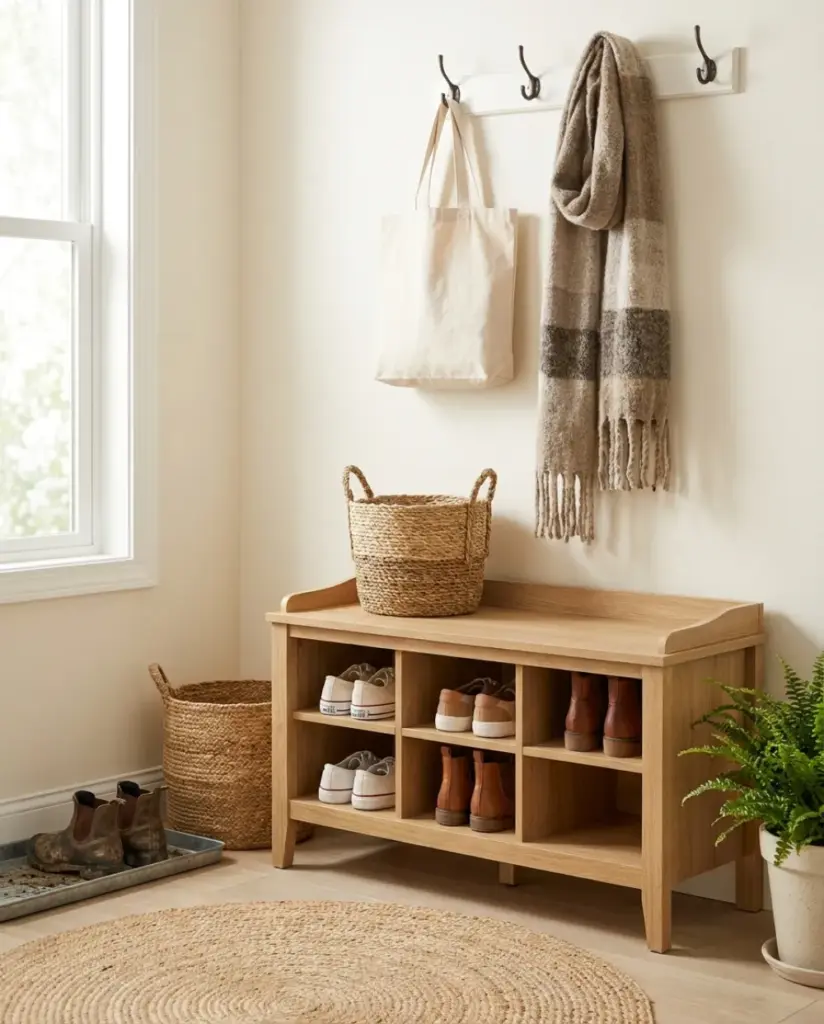
A shoe storage bench gives the family a seat for putting shoes on and open cubbies underneath for the pairs worn every day. It turns the front door into a landing zone instead of a pile. Our guide on how to organize an entryway walks through the full drop zone around it.
- Plan one cubby or one shelf section per person.
- Keep only the current season’s pairs in the bench.
2. Slim Tip-Out Shoe Cabinet: Best for Narrow Hallways
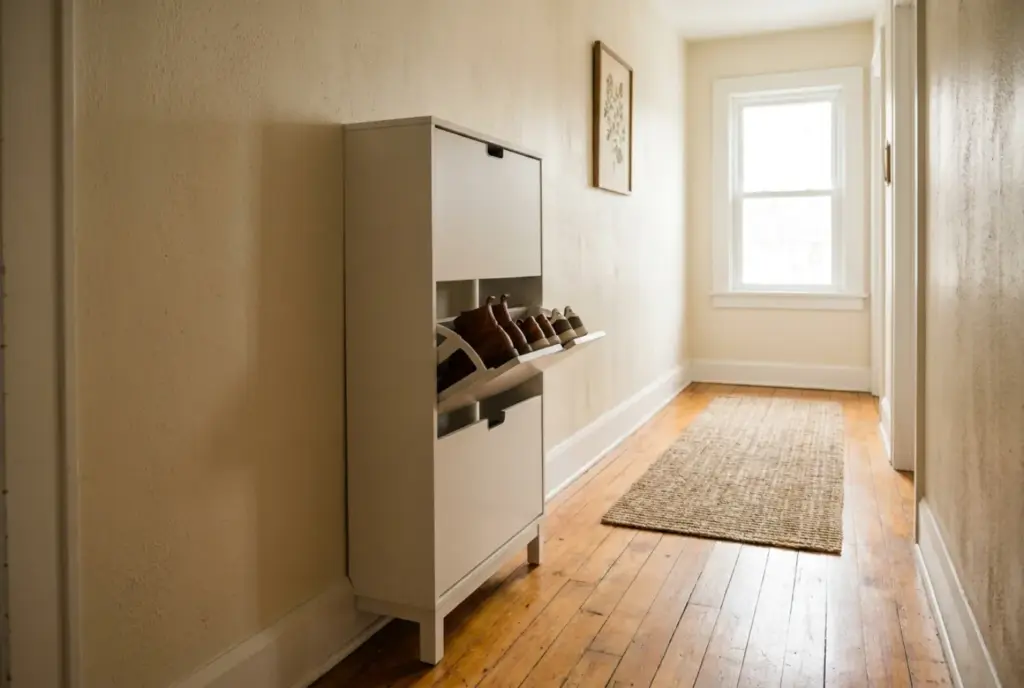
A slim tip-out shoe cabinet stores shoes upright in flip-down drawers, so it sits only a few inches off the wall. It works where a bench would block the path. The closed front also hides mismatched sneakers from guests.
- Measure hallway clearance before buying.
- Anchor tall cabinets to the wall so they cannot tip.
3. Boot Tray With Wall Hooks: Best for Wet and Snowy Months
A boot tray with wall hooks catches snowmelt and mud before it reaches the floor, which matters during a Metro East winter. A rubber or metal tray holds wet boots. Hooks above it hang backpacks, scarves, and umbrellas.
- Place the tray on the hinge side of the door.
- Move boots inside to dry fully before storing them away.
4. Over-the-Door Shoe Organizer: Best for Small Closets
An over-the-door shoe organizer uses the back of a closet or bedroom door, a space most homes leave empty. Clear pockets show every pair at a glance. Pockets also hold flip-flops, slippers, and small accessories.
- Choose clear pockets so pairs are easy to spot.
- Check that the door still closes with shoes loaded.
5. Stackable Shoe Racks: Best for Growing Collections
Stackable shoe racks add shelves as a collection grows and fit closet floors or basement walls. Many racks adjust between flat and angled shelves. Flat shelves suit sneakers, and angled shelves display heels.
- Leave a few inches between tiers for airflow.
- Store taller boots on the top tier.
6. Clear Drop-Front Shoe Boxes: Best for Special-Occasion Pairs
Clear drop-front shoe boxes protect dress shoes and heels from dust while keeping each pair visible. The front panel opens without unstacking the column. They suit wedding shoes, dress boots, and sneakers you want to keep clean.
- Keep heavier boot boxes on the bottom of the stack.
- Group boxes by color or by occasion.
7. Closet Shelves With Risers: Best for Heels and Flats
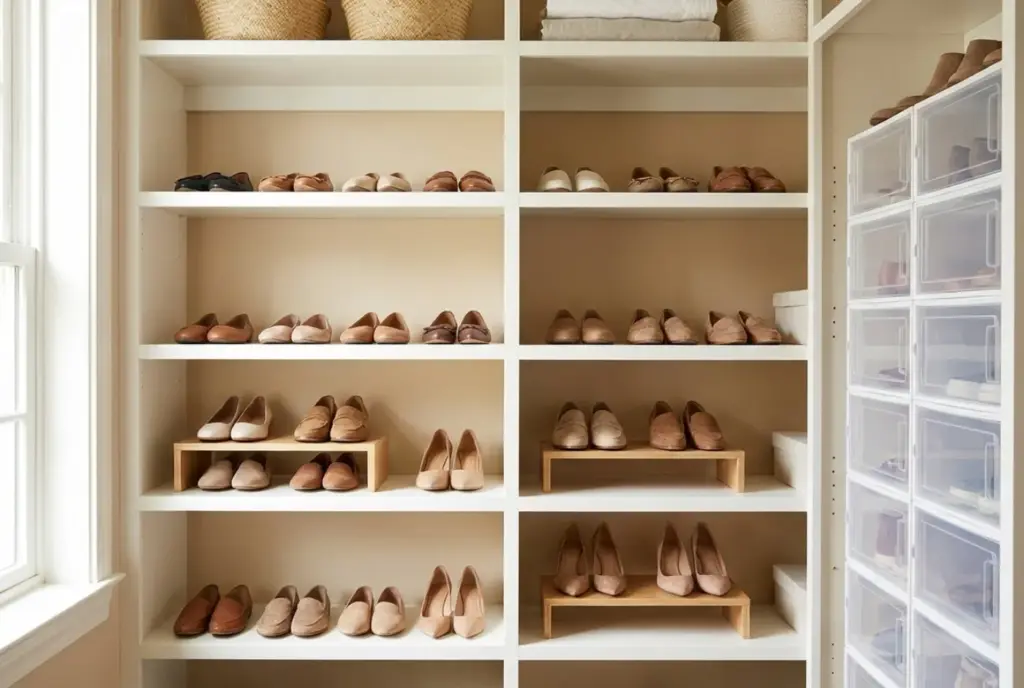
Closet shelves with risers double the rows on one shelf by lifting the back row above the front. Flats and low heels fit well this way. Our closet organizing guide covers how to plan shelf space around clothing first.
- Put everyday work shoes at eye level.
- Set formal pairs on higher shelves.
8. Under-Bed Shoe Storage: Best for Off-Season Pairs
Under-bed shoe storage holds sandals in winter and snow boots in summer without using closet space. Low, lidded containers with dividers keep pairs together. Measure the bed’s clearance first, since many frames sit too low for boxes.
- Choose breathable fabric bins for leather shoes.
- Rotate pairs when the seasons change.
9. Garage Shoe Station: Best for Work Boots and Cleats
A garage shoe station keeps muddy work boots, yard shoes, and sports cleats out of the house. A wall shelf near the house door works well. Our guide on how to organize a garage shows how to zone the rest of the space.
- Use a wire or slatted shelf so soles dry.
- Give each sport its own bin.
10. Kids’ Shoe Bins and Cubbies: Best for Little Feet
Kids’ shoe bins and low cubbies let children put their own shoes away. A bin per child is easier than pairing shoes on a shelf. Our guide to organizing toys and a playroom uses the same kid-height logic.
- Use picture tags so pre-readers know which bin is theirs.
- Pass along outgrown pairs each season.
What is the best shoe rack for storing a lot of shoes?
The best shoe rack for storing a lot of shoes is a tall, open rack with adjustable shelves that fits the full height of a closet wall. Height adds capacity without eating floor space. Adjustable shelves let one rack hold sneakers, flats, and ankle boots at once.
- Pick a rack that reaches close to the ceiling.
- Choose wire or slatted shelves so shoes dry.
- Give tall boots their own shelf or a boot rack.
A rack holds the most when it only holds pairs you wear, which is where a clear set of selection rules helps.
How did we choose these shoe storage ideas?
We chose these shoe storage ideas by asking where shoes actually land in a home and which storage type keeps them there. Each pick had to meet four tests.
- Location: it fits the spot where shoes come off.
- Access: daily pairs can be grabbed with one hand.
- Airflow: shoes can dry and breathe.
- Upkeep: every person in the home can put a pair back.
We describe storage types rather than brands, because the right product depends on your measurements.
What is the proper way to store shoes?
The proper way to store shoes is clean, fully dry, and in a space with air movement. Mildew grows on leather in damp, poorly ventilated closets, according to University of Missouri Extension guidance on preventing mildew.
Control moisture
The EPA recommends keeping indoor humidity ideally between 30 and 50 percent to prevent mold. That matters for shoes kept in basements and garages.
Protect the shape
- Wipe soles before storing pairs for the season.
- Stuff boots with paper or boot shapers.
- Skip airtight plastic for leather shoes.
How do you fit a lot of shoes in a small space?
You fit a lot of shoes in a small space by going vertical and storing fewer pairs in prime spots. Doors, walls, and the space under beds hold more than most closet floors.
- Keep only daily pairs by the door.
- Move off-season pairs under beds or up high.
- Let go of pairs that hurt, do not fit, or sit unworn.
Footwear is part of the textile waste stream the EPA tracks, which reached 17 million tons of textiles generated in 2018. Donating wearable pairs keeps them in use longer.
How does a professional organizer set up shoe storage?
A professional organizer sets up shoe storage by sorting every pair first, then building a home for each category. At Just Right Organizing, shoes are often part of our closet organizing services, along with entryways and garages.
- We sort pairs into keep, donate, and repair.
- We research products and send shopping links you buy yourself.
- Donation haul-away is included with each session.
Families from Alton to professional organizing in Troy, IL use this hands-on help when shoe storage keeps falling apart.
Frequently asked questions
Where should you store shoes in a small house?
Store shoes in a small house on vertical surfaces: the backs of doors, wall-mounted racks, and under beds. Keep only daily pairs by the entry and move off-season pairs to higher or lower storage.
Is it bad to store shoes in plastic boxes?
Clear plastic boxes work for clean, dry dress shoes, but airtight plastic is a poor choice for leather. Leather needs airflow, so a breathable box or cloth bag is safer for long storage.
How do you store shoes so they don't smell?
Store shoes so they do not smell by letting them dry fully before putting them away and keeping them in a ventilated spot. Rotate daily pairs so each pair gets a full day to air out.
Where do you put shoes when you walk in the front door?
Put shoes in a bench, tray, or cabinet right inside the front door. A defined landing spot keeps pairs from spreading into the hallway and living room.
Want help setting up shoe storage that lasts?
If shoes are spilling out of closets and across the entry, our team can sort them, plan the storage, and set it up with you. Packages start at $850, and every project begins with a free organizing consultation by phone.